
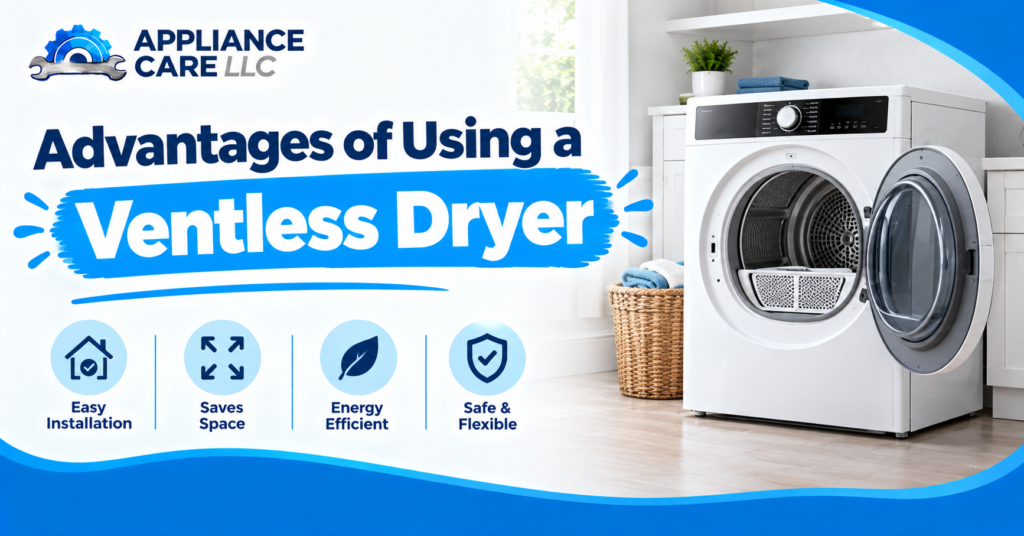
A ventless clothes dryer is the smarter pick when you want laundry flexibility without cutting a hole through an exterior wall. It dries clothes without an outdoor exhaust duct, which makes it useful for condos, apartments, closets, additions, older homes, and compact laundry areas.
It’s not perfect for every household, but if space and installation limits are your biggest headaches, a ventless dryer deserves a serious look.
What Is a Ventless Dryer?
A ventless dryer is a clothes dryer that doesn’t push hot, moist air through a duct to the outside. Instead, it removes moisture inside the machine and sends the collected water to a tank, drain hose, or plumbing connection, depending on the model. That’s the big advantage: a ventless clothes dryer can go places where a traditional vented dryer can’t.
There are two main types. A condenser model uses heated air and a heat exchanger to turn moisture into water. A ventless heat pump dryer uses a closed-loop system that recycles warm air, removes moisture, and reuses heat instead of constantly creating and exhausting new hot air. ENERGY STAR explains that heat pump dryers don’t require ventilation and can reduce energy use compared with standard dryers. (energystar.gov)
How Do Ventless Dryers Work?
Ventless dryers work by circulating warm air through wet laundry, pulling moisture from the fabric, then cooling or processing that air so the moisture becomes liquid water. If you’ve searched “how do ventless dryers work,” “how does a ventless dryer work,” or “how does a ventless dryer work,” the short answer is this: they dry clothes in a sealed system instead of exhausting air outdoors.
A standard vented dryer is basically a one-way system. It heats air, tumbles clothes, and blows humidity outside. A ventless electric dryer keeps the process contained. That’s why installation is simpler, but it’s also why many loads can take longer than a traditional vented cycle, especially with bulky towels or mixed fabrics.
The Biggest Advantages of a Ventless Clothes Dryer
The best reason to buy a ventless clothes dryer isn’t trendiness. It’s practicality. Ventless dryers solve real layout problems, especially in homes where adding ductwork would be ugly, expensive, restricted, or flat-out impossible.
Key benefits include:
- No exterior vent required: You don’t need to route ductwork through a wall, roof, crawlspace, or window.
- Better placement flexibility: A compact dryer can fit in closets, kitchens, bathrooms, upper floors, and interior laundry rooms if the manufacturer’s clearance rules are met.
- More options for apartments and condos: High-rise buildings and older units often don’t have dryer vents, which makes ventless dryers a practical option.
- Less conditioned air loss: A vented dryer sends indoor air outside. A ventless model keeps the drying process contained.
- Gentler drying: Heat pump models usually run at lower temperatures, which can be easier on fabrics.
- Cleaner exterior design: No outside vent cap means no visible wall penetration and no exterior lint buildup around a vent outlet.
The Department of Energy has noted that ventless clothes dryers can work in locations where venting restrictions would prevent a standard dryer installation, including some high-rise apartments. (govinfo.gov) That’s not a small perk. For many people, it’s the difference between having in-unit laundry and dragging baskets to a shared laundry room.
Space-Saving Laundry Setups That Actually Make Sense
A ventless clothes dryer is often paired with small-space laundry designs. That includes a compact dryer beside a washer, a ventless stackable washer and dryer, or a washer-dryer combo that washes and dries in one drum.
If you’re choosing for a tight space, think through the full setup, not just the appliance width. You’ll need room for door swing, airflow clearance, access to filters, access to the water tank if it’s not drain-connected, and enough space to load laundry without fighting the wall.
Good fits often include:
- Closet laundry: A stacked pair can work well when the closet has proper electrical service, clearance, and access.
- Condo laundry: A ventless washer-dryer or separate ventless units may fit where exterior venting isn’t allowed.
- Guest suites and additions: A ventless clothes dryer can avoid major wall changes when adding laundry to a finished area.
- Small rentals: A portable dryer may help in some cases, but don’t assume “portable” means safe to use without proper moisture control.
- Tiny homes and ADUs: Compact laundry equipment can make a small floor plan more livable.
Here’s my opinion: if you have a small home, don’t automatically chase the biggest drum. A slightly smaller, better-placed ventless clothes dryer that you’ll actually use comfortably beats a full-size machine crammed into the wrong spot.
Ventless Heat Pump Dryer vs. Condenser Dryer
A ventless heat pump dryer is usually the better long-term choice if energy use, fabric care, and lower operating temperatures matter to you. A condenser dryer can cost less upfront in some cases and may feel more familiar, but it often uses more heat.
Heat pump dryers recycle warmed air rather than dumping it outdoors, which is why they’re known for energy efficiency. ENERGY STAR says certified heat pump models use a closed-loop system and can be easier to install because they don’t need ventilation. (energystar.gov)
Still, you shouldn’t buy one blindly. Heat pump models can have longer cycles, and they need regular filter cleaning. If your family runs nonstop laundry and expects every load to be bone-dry fast, you’ll need to adjust expectations or choose a higher-capacity model carefully.
Ventless Washer Dryer Combo Units Are Convenient, With Tradeoffs
A washer-dryer combo is appealing because one appliance handles washing and drying. A ventless washer-dryer combo can be especially useful when there’s only enough room for one machine. It’s a clean solution for small condos, studio apartments, guest areas, and homes where transferring wet clothes between machines is inconvenient.
So, how does a ventless washer dryer work? It washes like a front-load washer, spins out water, then dries inside the same drum using condensation or heat pump drying. The catch is capacity and time. You usually can’t wash the next load while the first one dries, and dry capacity may be lower than wash capacity. Consumer Reports notes that all-in-one washer-dryer combos using condensation or heat pump technology can take longer to dry than traditional vented dryers. (consumerreports.org)
That doesn’t make them bad. It means they’re best for people who value convenience and space savings over rapid back-to-back laundry.
Smart Buying Tips Before You Choose
A ventless clothes dryer is only a good buy if it fits your home and habits. Before ordering, check the details that shoppers often skip.
Use this quick checklist:
- Measure the space twice: Include depth, hookups, doors, trim, baseboards, and walking room.
- Confirm electrical needs: Some models use standard outlets, while others may need a different circuit.
- Plan water removal: Decide whether you’ll empty a tank or connect a drain hose.
- Check stacking compatibility: Don’t stack random machines together. Use approved kits and matched dimensions.
- Read clearance rules: Ventless doesn’t mean zero clearance.
- Clean filters on schedule: Lint buildup hurts drying performance.
- Sort loads better: Heavy towels and thin shirts dry at different speeds.
- Use sensor drying: It helps prevent overdrying and wasted energy.
If you want a ventless clothes dryer for a closet, pay close attention to service access. You don’t want a setup that looks slick on day one but requires half the closet to be disassembled when maintenance is needed.
Common Mistakes That Make Ventless Dryers Frustrating
Most complaints about ventless dryers come from mismatched expectations. People expect a compact machine to behave exactly like a large vented dryer, then get annoyed when heavy loads need more time. That’s avoidable.
Don’t overload the drum. Clothes need room to tumble so air can move through the load. Don’t ignore the second lint filter or condenser cleaning instructions either. A ventless clothes dryer depends on steady airflow and clean heat exchange surfaces.
Also, don’t treat a portable dryer as the same thing as a true ventless dryer. Some compact or portable models still need venting. Read the manual, not just the product name.
How DMV Appliance Care Can Help
If your ventless clothes dryer isn’t drying well, smells musty, stops mid-cycle, leaks, or leaves laundry damp, DMV Appliance Care can help diagnose the issue and get your laundry routine back on track. Their team can inspect common problem areas such as clogged filters, drainage issues, sensors, airflow restrictions, and installation concerns.
They can also help homeowners understand whether a ventless electric dryer, ventless washer-dryer, or separate ventless stackable washer and dryer setup is performing the way it should. That matters because many “bad dryer” problems are really maintenance, drainage, loading, or setup problems.
Conclusion
A ventless clothes dryer is a strong choice when flexibility matters more than raw speed. It saves space, avoids exterior venting, and fits homes that traditional dryers can’t serve well. Pick the right style, maintain it properly, and it’ll make laundry easier without a major remodel.
Frequently Asked Questions:
How does a ventless clothes dryer work?
A ventless clothes dryer heats air, moves it through wet clothes, removes moisture inside the machine, and collects or drains the water. It doesn’t exhaust humid air outside.
What is a ventless dryer best for?
A ventless dryer is best for apartments, condos, closets, interior laundry rooms, additions, and homes where installing an outdoor dryer vent isn’t practical.
Do ventless dryers take longer to dry clothes?
Yes, ventless dryers often take longer than traditional vented dryers, especially with heavy loads. Smaller loads, good sorting, and clean filters improve drying performance.
Is a ventless heat pump dryer worth it?
A ventless heat pump dryer is worth it if you want energy efficiency, gentler drying, and flexible placement. It’s less ideal if you need the fastest possible cycles.
How does a ventless washer dryer work?
A ventless washer-dryer washes clothes, spins out water, then dries in the same drum using condensation or heat pump technology instead of an exterior vent.