
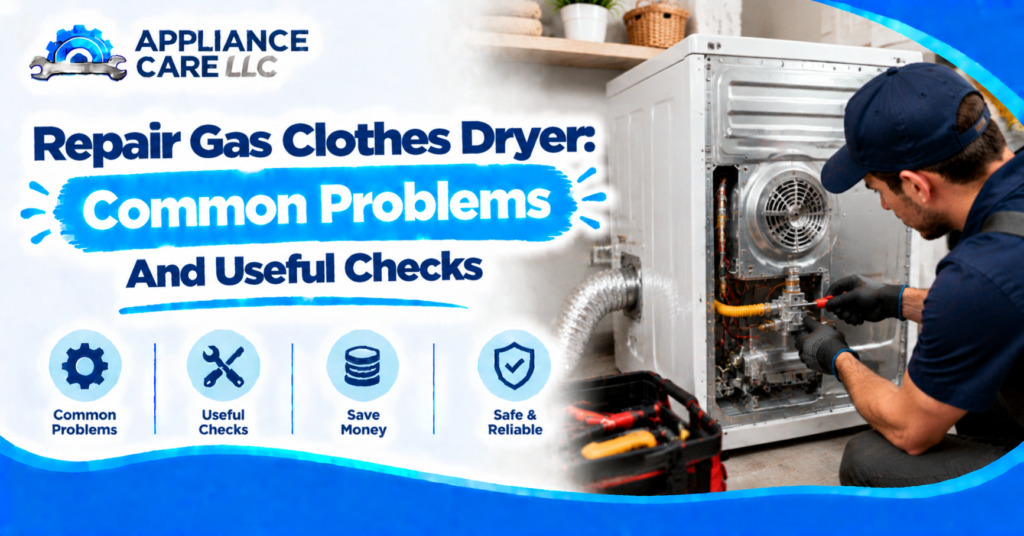
Have you opened your dryer to find cold clothes? You might need to repair gas clothes dryer problems. Gas dryers depend on several parts for heat. One failed part often stops the burner. Your dryer might still spin during this fault. So the problem often hides in plain sight. Gas supply also matters during a no-heat issue.
Blocked vents create another common drying problem. Wrong cycle settings also cause cold loads. This guide explains the common causes clearly. You will learn safe checks for your dryer. You will also learn when service makes sense.
Common Gas Dryer Problems You Should Check
Gas dryers often show clear signs before failure. Watch the symptoms before buying replacement parts. A careful check saves money and wasted time.
- No Heat: A gas dryer not heating often points toward ignition faults.
- No Start: A dryer not working needs power and switch checks.
- Slow Drying: Blocked vents often reduce airflow during cycles.
- Odd Sounds: Worn belts and rollers often create noise.
- Long Cycles: Poor airflow leaves clothes damp for longer.
Whirlpool also lists gas supply as an early check. A closed valve lets drums spin without heat.
Why Your Gas Dryer Stops Producing Heat
A gas dryer uses several parts for heat. Each part works during a set heating sequence. One failed part interrupts the whole sequence.
Gas Supply Problems
Start with the gas supply valve. The valve handle should sit parallel to its pipe. A closed valve stops burner heat. The drum might still spin during this fault. Whirlpool provides this check for gas dryers.
Failed Igniter
The igniter starts the burner flame. It should glow during the heating cycle. A failed igniter stops the flame from starting. This often leaves clothes damp after drying. Gas dryer repair guides list this fault often.
Weak Gas Valve Coils
Gas valve coils control gas flow. Failed coils stop gas from reaching the burner. The igniter might glow before going dark. No flame follows that glow. RepairClinic lists coils among common gas dryer faults.
Simple Checks Before You Repair A Clothes Dryer
Start with easy checks before opening the cabinet. Some dryer faults come from simple settings or airflow. These checks also reduce wrong part purchases.
- Check the Cycle: Repairing a clothes dryer starts with cycle settings.
- Check the Valve: Gas dryer repair starts with gas supply.
- Check the Lint Screen: Clean lint before every load.
- Check the Vent: A dryer not working needs airflow checks too.
- Check the Breaker: A tripped breaker might stop operation.
Whirlpool also recommends checking the selected cycle. Air-only cycles do not produce heat.
When A Gas Dryer Needs Professional Repair
Some faults need more than basic cleaning. Gas parts also require extra care during service. Stop work if you smell gas nearby. Leave the area and contact your gas provider.
The Dryer Smells Like Gas
Never ignore a gas smell around your dryer. Do not keep testing the machine. Shut off the gas supply if safe. Then contact the proper gas service provider.
The Burner Will Not Ignite
A burner failure needs proper testing. The igniter might fail during the start sequence. Gas valve coils might also fail. These parts need careful diagnosis before replacement.
The Dryer Overheats
Poor airflow often raises dryer temperatures. Lint buildup also blocks exhaust paths. A failed thermal fuse might follow overheating. Do not replace the fuse without checking airflow.
How Much Does Dryer Fix Cost?
Repair prices depend on the failed part. Labor rates also differ between service companies. Your dryer model affects parts pricing too. One 2026 estimate puts no heat repairs at $75 to $350. Igniter repairs often fall within a smaller range. That same source estimates $100 to $250. Use estimates only as rough planning numbers. A technician should inspect the dryer first. Avoid replacing parts based only on symptoms.
How Long Does A Dryer Last?
Many dryers serve households for several years. Repair decisions depend on age and repair cost. A newer dryer often makes repair sense. Older units need closer cost checks. One 2026 cost guide uses eight years as one comparison point. It also compares repair cost with replacement cost. Your dryer condition matters more than age alone. A simple belt repair differs from board failure. Gas valve repairs also differ from cabinet damage. Ask for the full repair estimate first.
How DMV Appliance Care Can Help You
DMV Appliance Care serves the DMV area. The company operates from Alexandria. It handles washers, dryers, ovens, and refrigerators. Dryer repair appears among its listed services. The company gives clear estimates before repair work. It also uses upfront pricing for customers. The company does not charge by the hour.
Its technicians receive training and certification. They also work with modern repair equipment. Flexible scheduling also suits busy households. For dryer service, contact DMV Appliance Care. Call +1 (703) 991-2298 for service help.
Conclusion
A cold gas dryer needs careful checking. Start with settings, airflow, and gas supply. Then look toward ignition parts and safety parts. Avoid guessing before buying replacement parts. Wrong parts waste money and repair time. Gas-related faults also need extra care. A professional check often saves repeated repairs. DMV Appliance Care serves dryer repair needs. Their team handles several home appliance types.
FAQs
Why is my gas dryer not heating?
Check the gas valve first. Then check the selected cycle and airflow. A failed igniter or gas coil might follow.
Should I repair gas clothes dryer problems myself?
Simple cleaning needs little repair work. Gas burner parts need trained service. Stop work immediately if you smell gas.
Why does my gas dryer spin cold?
The drum might spin without burner heat. Check the gas valve first. Then inspect ignition parts during service.
How much does gas dryer repair cost?
Costs depend on parts and labor. A 2026 estimate lists $75 to $350 nationally. Local prices might differ from this range.
How long does a dryer last?
Dryer life varies by model and use. Repair cost also matters as dryers age. Compare repair costs with replacement prices first.