
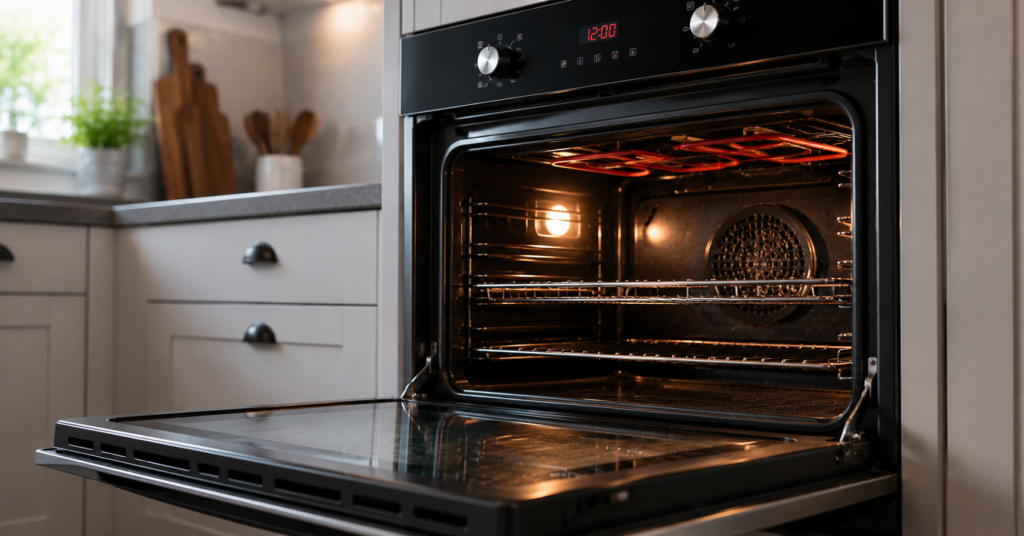
When your oven won’t heat, dinner stops before it starts. Sometimes the oven warms a little but never reaches the set temperature; other times it takes forever to preheat or cooks unevenly. In most cases, an oven that is not heating properly comes down to a few parts: the bake or broil element in electric ovens, the igniter in gas ovens, the temperature sensor, or a power or gas supply problem. This guide explains why your oven is not heating up, the safe checks you can do yourself, and when it is time to call a technician.
This guide explains common oven problems in simple words with easy troubleshooting steps. You will also learn how to fix oven not heating issues at home and when it is time to call the experts at Appliance Care.
Why Won’t My Oven Heat Up? 4 Common Causes
Faulty Heating Element
Heating elements create the heat inside electric ovens. When an element fails, the electric oven won’t heat up, or the oven struggles to reach the set temperature. Burn marks, blisters, and cracks are the usual signs of a damaged element.
A quick visual check helps you spot the problem early. It also explains why my oven turns on, but there is no heat, since the oven can power up while the element stays cold. This is the classic case of an oven turning on but no heat.
Broken Igniter
Gas oven igniters light the burner during cooking and baking. A weak igniter means the oven won’t heat because the gas never ignites properly. Clicking sounds without a flame usually point to a failing igniter, and a fast repair gets your cooking schedule back on track.
Temperature Sensor Issues
The temperature sensor tells the oven control how hot the cavity is. A faulty sensor sends wrong readings, which is a common reason for an oven not heating up to the correct temperature. If the dial says 350 degrees but the oven feels much cooler, the sensor is a prime suspect.
Electrical Problems
Electric ovens need steady power to heat. Loose wires, a tripped breaker, or a failed control board can leave you with no heat at all. These problems also explain why my oven isn’t turning on, since the display, lights, and heating system may all depend on the same supply.
If oven not heating up but stove works describes your kitchen, the oven has its own issue. The burners and the oven run on different parts, so a working stovetop usually points to the element, igniter, sensor, or oven control. On the other hand, if the stove is not heating up as well, check the shared power supply or call for a full inspection through our stove and cooktop repair service.
Signs Your Oven Needs Repair
Uneven Cooking
Some foods burn while other areas stay raw. If your oven is not heating properly, uneven baking is often the first symptom. Faulty parts cannot hold a stable temperature, so meals cook unevenly in every session. When oven not heating properly becomes a pattern, schedule an inspection.
Long Preheat Times
Ovens should preheat in a reasonable time. A long wait usually means weak heating parts. Many homeowners notice the oven not heating up quickly before the problem turns into a total failure.
No Heat at All
A completely cold oven signals a serious problem that needs attention. If your oven stopped heating up in the middle of a cooking cycle, a burned-out element, a failed igniter, or a power issue is likely. If my oven is not heating at all, stop using it until it is checked.
You may also notice that your oven is not working properly in other ways, such as flickering lights, a dead display, or odd noises. These are all good reasons to book a repair. If your oven produces no heat at all, follow the step-by-step checks in our guide to an oven not heating at all.
Oven Not Heating Properly vs. Not Heating at All
It helps to know which problem you have. If your oven heats but runs cool, takes a long time to preheat or burns one side of a dish, the cause is usually a weak heating element, a failing igniter that opens the gas valve slowly, or a temperature sensor that reads wrong. These partial failures often get worse over time. If the oven stays completely cold while the display and lights work, the problem is more likely a burned-out element, a dead igniter, a tripped breaker or a blown thermal fuse. For that case, see our full guide to an oven not heating at all.
DIY Troubleshooting Steps
Before you call a technician, these steps may help you figure out why your oven is not heating and fix simple issues.
Check the Power Supply
Inspect plugs and power cords for damage and reset any tripped breaker. Many people asking why my oven is not working discover a loose connection or a tripped breaker. Stable power is the first thing to confirm.
Inspect the Heating Element
Look for cracks, burn marks, and dark spots on the element. If the element does not glow red while the oven is on, it likely needs replacement. This is a key step in the ” why is my oven not heating up troubleshooting for electric models.
Reset Oven Settings
Turn the oven off for a few minutes, then restart it. A simple reset clears small control glitches, and many cases of an oven not heating up improve afterward. Check your user manual for the correct reset steps for your model.
Oven Not Heating Repair: When to Call a Technician
Call a technician if your oven still won’t heat up after you have checked the breaker, power cord and settings, or if you smell gas, see sparks or notice a scorched element. Gas igniters, bake elements, temperature sensors and control boards all need correct testing with a meter, and gas work should never be a DIY job. Appliance Care LLC provides oven not heating repair across Northern Virginia and Maryland. Your technician will test each part, explain what failed and give you the repair cost before any work starts.
Tips to Prevent Oven Heating Problems
Regular Cleaning
Grease and food buildup make ovens work harder and heat less evenly. Regular cleaning keeps heating parts working well and helps ovens last longer.
Avoid Slamming the Oven Door
Slamming the door damages hinges, seals, and sensors. A loose door also lets heat escape, which can make it look like the oven isn’t heating properly even when the parts are fine. Close the door gently.
Schedule Routine Maintenance
Yearly inspections catch small problems early, lower repair costs, and keep your oven safe and reliable for holidays and family gatherings.
Why Choose Appliance Care LLC
Appliance Care LLC repairs ovens across Virginia and Maryland. Our skilled technicians understand the heating problems that affect busy family kitchens. Families trust us for fast repairs, fair pricing, and honest service.
Contact Us for Oven Repair in Northern Virginia and Maryland
Oven trouble creates stress during cooking and baking. We repair ovens across Northern Virginia and Maryland, checking heating parts, sensors, and electrical systems with care. Contact us today for reliable oven repair and helpful maintenance advice.
Conclusion
Oven not heating problems are stressful, but simple troubleshooting solves many of them. Clean ovens, gentle use, and quick repairs keep your appliance running longer. When the problem is bigger than a reset or a breaker, our team is ready to help.
Frequently Asked Questions:
This is usually caused by a faulty heating element, a broken igniter in gas ovens, or a malfunctioning temperature sensor. When the oven turns on, but there is no heat, one of these parts is usually the cause.
A working display only means the control board has power. Why won’t my oven heat up is often answered by a failed element, igniter, or thermal fuse.
Simple fixes like resetting the oven or replacing a visibly damaged element can be done at home. For electrical and gas repairs, how to fix an oven not heating safely means calling a professional.
Why won’t my CDA oven heat up uually comes down to a failed heating element, a faulty thermostat or sensor, or a blown thermal fuse. A technician can test each part to confirm the cause.s
A broken element shows cracks, blisters, or burn spots and may not glow red. If your electric oven won’t heat up, a multimeter test can confirm whether the element is receiving power.
An oven that heats but never reaches the set temperature usually has a weak heating element, a gas igniter that is too slow to open the gas valve, or a faulty temperature sensor. A dirty or damaged door gasket can also let heat escape. An oven thermometer helps you confirm the problem before you book a repair.
Start with the simple things. Check that the breaker has not tripped, the oven is plugged in, and for gas ovens that the gas supply valve is open. Make sure the oven is not in a timed-bake, delay-start or control-lock mode. If everything looks right and the oven still won’t heat, a part has likely failed.
The cost depends on which part failed, whether the oven is gas or electric, the brand and model, and how easy the part is to reach. Replacing a bake element usually costs less than replacing a control board. Request a free estimate and your technician will confirm the cause and the price before any work begins.