
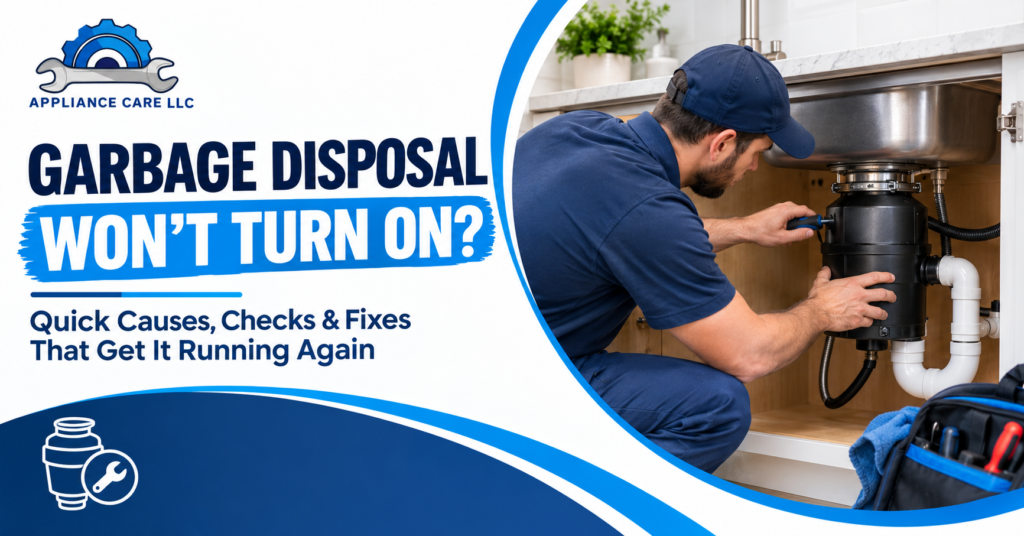
A garbage disposal is a handy tool in the kitchen, making cleanup easier. However, it’s frustrating when your disposal stops working. If you’re wondering, “Why is my garbage disposal not working?” you’re not alone. Many homeowners experience this issue.
In this guide, we’ll explore common problems like a humming noise or complete silence. We’ll also share practical steps on how to fix your garbage disposal when it stops working. Get ready to tackle those disposal troubles and restore peace to your kitchen!
Why is My Garbage Disposal Not Working?
If you’re asking why my garbage disposal is not working, start by listening. Silence usually points to power, a tripped breaker, a loose cord, a bad wall switch, or the unit’s reset button. Humming usually means the motor is getting power, but the grinding plate is stuck. Water backing up points more toward a drain clog than a motor problem, so don’t treat every issue like the same failure.
Before you reach under the sink, turn the wall switch off. If the unit is hardwired or you’re unsure where the power comes from, shut off the breaker too. Never put your hand inside the disposal chamber, even when it seems dead, because a jammed unit can start suddenly once power returns.
Gather What You Need Before You Start
You don’t need a full tool chest to diagnose most disposal trouble. Keep the work area dry, clear out bottles under the sink, and use a flashlight so you can see the underside of the unit clearly. If anything smells burned, leaks from the bottom, or trips power repeatedly, stop and call for help.
Useful items include:
- Quarter-inch Allen wrench, often used in the hex socket underneath the disposal
- Flashlight, for checking the reset button, plug, and chamber
- Tongs or pliers, for removing visible debris without using your hand
- Bucket and towels, in case the trap or sink area drips
- Garbage disposal repair notes, such as the brand, model, and age, if available
- Moen garbage disposal not working manual, if you have a Moen model with a different anti-jam setup
Fix A Garbage Disposal Not Working In Seven Steps
Turn off the power first
Flip the wall switch off, unplug the unit if it uses an outlet, or turn off the breaker. This step isn’t optional. A broken garbage disposal can surprise you, and the safest repair is the one where the motor can’t start while you’re inspecting it.
Check the outlet, switch, and breaker
When a garbage disposal is not working and is completely silent, power is the first suspect. Confirm the cord is plugged in, then check whether a nearby GFCI outlet has tripped. Look at the electrical panel too, because a disposal can trip a breaker after being overloaded. If the breaker trips again right away, don’t keep resetting it.
Press the reset button
Look underneath the disposal for a small red or black reset button. If it has popped out, press it in firmly, wait a moment, restore power, and test with cold water running. If it won’t stay in, the motor may still be jammed, overheated, or failing.
Free a jam from below
A garbage disposal humming but not working is usually jammed. Turn the power off again, insert the Allen wrench into the center hex socket on the bottom, and work it back and forth. You’re not trying to force a full spin at first; you’re trying to break loose whatever is wedged inside. Once the wrench moves freely, remove it before testing.
Remove visible debris safely
If your garbage disposal is not working and has a clank, scrape, or sudden stop, shine a flashlight into the sink opening. Use tongs or pliers to remove bones, pits, glass, twist ties, or utensils. I’ve found that the smallest items, especially fruit pits and broken glass, cause the nastiest jams because they wedge under the plate instead of sitting in plain sight.
Run water and test briefly
Restore power, run cold water, and flip the switch for only a second or two. If it spins normally, let cold water run while the chamber clears. If the garbage disposal is not working humming sound returns, shut it off fast. Holding the switch on while it hums can overheat the motor.
Clear the drain if the motor runs but water stays
If the disposal spins but the sink won’t drain, the issue may be in the trap or drain line. Turn the unit off, place a bucket under the P-trap, and remove the trap only if you’re comfortable with basic plumbing. Avoid chemical drain cleaners in a disposal sink; they can splash, corrode parts, and make later repairs messier.
When Should You Stop Troubleshooting?
Stop troubleshooting when the disposal leaks from the bottom, smells like burning electrical parts, trips the breaker more than once, or keeps humming after you’ve freed the plate. At that point, trying to fix garbage disposal problems with repeated resets is usually a waste of time. A motor, seal, switch, or internal component may need professional diagnosis.
For a Moen garbage disposal not working, check the manual before assuming the bottom hex socket works the same way as other brands. Some models use different unjamming methods, and forcing the wrong tool can damage the unit. If my garbage disposal is not working and I can’t free it after a few careful attempts, I stop. That’s not being cautious for no reason; it’s cheaper than turning a small jam into a replacement.
Prevent The Same Problem From Coming Back
The best way to avoid a garbage disposal not working again is to treat it like a food-waste helper, not a trash can. Run cold water before, during, and after use. Feed scraps slowly instead of stuffing the chamber. Skip grease, fibrous peels, coffee grounds, hard pits, shells, and large bones.
A simple weekly routine helps:
- Cold water flush to carry small particles through the drain
- Small citrus pieces, for odor control after normal cleaning
- No grease rule, because cooled fats can coat the drain
- Short grinding batches, which reduce overload and jams
- Prompt repair, when noises change or reset trips repeat
How DMV Appliance Care Can Help
DMV Appliance Care helps homeowners sort out disposal issues without guesswork, from a garbage disposal not working after a reset to noisy operation, leaks, jams, and replacement decisions. Their appliance repair support can include inspection, diagnosis, garbage disposal repair, and guidance when replacement is the smarter route.
What matters most is that you get a clear explanation of what failed, what can be repaired, and what outcome to expect before work moves forward. That kind of communication builds trust, especially when the problem is hidden under the sink and you just want the kitchen usable again.
Their team focuses on practical results, careful service, and customer support that doesn’t leave you guessing. If you’d rather have a trained technician handle it, call or use the contact link to ask for help.
Conclusion
Troubleshooting garbage disposal issues can seem daunting, but understanding common problems and solutions empowers you to tackle the situation confidently. From addressing humming sounds to knowing when to call for professional help, we’ve equipped you with the knowledge to handle your garbage disposal effectively. Remember, routine maintenance, such as regular flushing with cold water and avoiding certain food scraps, can help prevent future issues. When in doubt, don’t hesitate to reach out to an expert who can provide assistance and ensure your kitchen remains a functional and enjoyable space.
Frequently Asked Questions:
What should I do if my garbage disposal is humming but not grinding?
If your garbage disposal is humming but not grinding, it likely means the motor is receiving power, but the grinding plate is jammed. Follow the troubleshooting steps to check for any foreign objects or obstructions, and try using a quarter-inch Allen wrench to free the jam.
How can I tell if my garbage disposal needs to be replaced?
Signs that may indicate you need to replace your garbage disposal include persistent leaks, a burning smell, repeated humming, and an inability to reset the motor. If the disposal has been repaired multiple times, it might be more cost-effective to invest in a new unit.
Can I use chemical drain cleaners in my garbage disposal?
It’s best to avoid chemical drain cleaners in your garbage disposal. They can cause damage to the disposal and may lead to more significant plumbing issues. Instead, try using a plunger or manually clearing the blockage if necessary.
Is it safe to put bones in the garbage disposal?
Generally, you should avoid putting bones in your garbage disposal, especially large ones, as they can cause jams and damage. Smaller, softer bones may not pose as much of a risk, but it’s best to err on the side of caution and dispose of them in the trash.
What causes a garbage disposal to trip the circuit breaker?
A garbage disposal can trip the circuit breaker due to an overload from a jammed motor, a short circuit, or an electrical fault. If this happens, immediately turn off the power and investigate the cause before resetting the breaker. If the problem continues, consult a professional.