
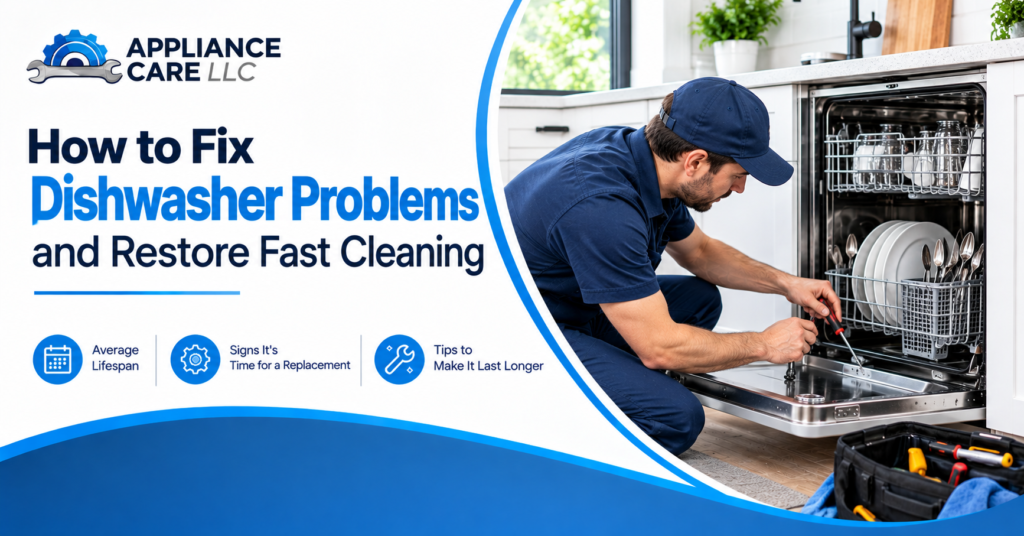
Have you ever opened your machine after a long cycle? You find warm, dirty standing water inside your unit. Food residue still clings to your clean utensils today. A broken washer throws your entire evening routine off.
Most common machine problems can be fixed by yourself. Clogs from food scraps happen inside dark drain tubes. Mineral scale coats internal plastic spray arms over time. You can clear these blockages in twenty short minutes. You do not need expensive repair technician visits now.
Fixing problems yourself gets your kitchen back to normal. You save a lot of household money easily. Simple hand tools help clear blocked rubber drain hoses. Soft nylon brushes remove thick grease from mesh filters. In this blog post, you will learn how to fix dishwasher issues at home quickly.
Quick Ways to Fix Your Dishwasher
Fixing common dishwasher issues requires simple step checks. Restore power, clean mesh filters, and clear blocked spray arms.
Won’t Start or Has No Power
- Check plug and breaker: Ensure the power cord fits tight in cabinet wall outlets. Look at breaker boxes to reset tripped electrical switches.
- Examine door latch: Loose door seals stop machine motors from starting cycles. Wipe away trapped grease around plastic door latch catches.
- Reset the power: Unplug the main power cord for five full minutes. Plug it back in to reset electronic control panels.
Dishes Come Out Dirty
- Clean the filter: Pull the bottom dish rack out of main tub tracks. Unscrew the bottom mesh cylinder and rinse under tap water.
- Unclog spray arms: Detach rotating spray arms from lower tub frames. Push thin metal wires through blocked plastic spray nozzle holes.
- Load properly: Place tall pans along side metal walls during loading. Free-spinning arms spray hot water over upper dish racks.
Water Won’t Drain
- Check the drain hose: Inspect flexible rubber drain hoses under kitchen sink counters. Unkink bent lines so dirty wash water drains out freely.
- Run the garbage disposal: Run your home garbage disposal unit for thirty full seconds. Shared drain line connections clear out residual food waste fast.
- Clear the air gap: Twist off chrome air gap caps next to kitchen faucets. Scoop out trapped food sludge inside small plastic top chambers.
Reasons Behind System Startup Failures
Understanding how to fix a dishwasher that won’t start begins by checking basic electrical points.
- Misaligned Door Safety Switch: A loose door switch prevents internal motors from running. Wipe away built-up grease using warm soapy water.
- Tripped Electrical Panel Breakers: Heavy power spikes trip wall breakers inside home boxes. Flip tripped breaker switches off and back on fast.
- Blocked Water Entry Valve Screen: Hard water minerals coat internal valve screens over months. Clean mineral scale out using a fresh vinegar soak.
- Overheated Main Pump Motor: Older motor coils shut down automatically on high heat. Unplug the power cord so hot internal coils cool down.
- Locked Electronic Control Memory: Small power surges cause digital control panels to freeze. Cut circuit breaker power for five minutes to reset.
Unblocking Stagnant Water and Clearing Drain Lines
Bad odors and standing water require immediate attention today. Follow these core steps when learning how to fix dishwasher not draining issues.
Scrub the Removable Floor Filter
Twist the cylindrical mesh filter out from the bottom floor. Rinse trapped food scraps under warm running tap water. Scrub greasy mesh screen panels using soft nylon brushes. Clean filters allow wastewater to flow out smoothly always.
Straighten Under-Sink Hose Bends
Inspect the ribbed rubber drain line running beneath counters. Unkink twisted rubber lines so dirty wastewater flows out. Clear thick grease blockages using flexible wire hose brushes. Free hoses stop water from backing up inside tubs.
Clear Shared Garbage Disposal Entrances
Food waste packs inside shared disposal nipples under sinks. Run your home garbage disposal unit for thirty seconds. Flush hot tap water down drains to melt grease. Clean connections keep shared drain pipes open and clear.
Practical Solutions for Spotty or Film-Coated Plates
Regular maintenance restores crystal shine to washed glasses. Learn how to fix a dishwasher not cleaning dinnerware effectively.
- Poke Open Clogged Spray Nozzles: Stray food seeds block small plastic spray arm holes. Push debris out using thin metal wire tools today. Free-spinning arms spray water evenly over dirty plates.
- Switch to Fresh Powder Detergents: Low-grade wash powders clump together inside cups. Fill dry cups with fresh enzymatic cleaning agents now. Good soap dissolves quickly in hot wash water cycles.
- Scrub Hard Water off Heating Elements: Calcium scale coats metal heating loops under racks. Wipe heating rods clean using damp microfiber cloths. Soaking cloths in vinegar improves final plate drying speed.
- Adjust Home Hot Water Tanks: Cold tap water fails to break down grease stains. Set home hot water tanks to high heat levels. Hot water activates soap powders for better dishwashing.
- Clean Soft Rubber Door Perimeter Seals: Dark mildew grows inside soft rubber door gaskets over time. Wipe perimeter rubber seals clean using warm vinegar water. Clean seals stop water leaks onto kitchen floors fast.
Stopping Water Spills and Reducing Mechanical Noises
Water leaking under cabinets damages hardwood floorboards very quickly.
Replace Split Perimeter Gaskets
Cracked door seals allow soapy water to drip out. Pull damaged rubber strips out from door perimeter channels. Press new rubber gaskets firmly into open side slots. Fresh seals keep wash water inside the tub safely.
Tighten Water Supply Brass Fittings
Examine copper water lines located behind bottom access panels. Tighten loose brass hose connections using adjustable hand wrenches. Firm connections prevent hidden floor rot under kitchen cabinets.
Remove Hard Objects from Impeller Cavities
Broken glass pieces make loud grinding noises during cycles. Remove lower rack panels to access chopper blade housings. Pick out hard bone fragments using long needle nose pliers. Clear impellers run smoothly without making harsh sounds.
Long-Term Preventive Habits for Kitchen Appliances
Knowing how to fix a dishwasher in kitchen setups extends overall unit life by years. Food grime coats water level sensors over long periods. Clean appliances use less electricity and wash plates faster. Routine care prevents unexpected water leaks inside base cabinets.
Scrape large food leftovers off dinner plates into trash cans. Hard fruit seeds damage plastic wash pump impellers over time. Rinsing heavy grease off pans protects internal motor seals.
Run hot tap water at your sink before starting cycles. Hot water fills the tub right from the start. Heated water dissolves stubborn grease off dirty pans instantly.
Pour two cups of white vinegar into upright glass bowls. Place the bowl on your top rack once every month. Run normal wash cycles using high temperature settings today. Vinegar clears mineral scale and removes lingering food smells.
How DMV Appliance Care Can Help You
Appliance Care handles all residential wash unit repair needs fast. We serve homeowners across Alexandria and the DMV area. Our skilled technicians service stoves, fridges, washers and dishwashers. We serve every client with total honesty and clear pride.
We never charge hidden fees or hourly labor rates. Your final repair quote stays clear and upfront before work. Certified technicians fix complex motor problems using modern diagnostic tools. We offer flexible service schedules to fit busy family lives. Call Appliance Care at +1 (703) 991-2298 for reliable service.
Simple Care Checklist for Kitchen Appliances
Check your dish machine floor filter every single week. Wipe food grease off perimeter rubber seals with damp cloths. Straighten kinked plastic drain lines under your sink counter. Run hot sink water before turning on fresh wash loads. These easy habits keep home units running smoothly for years.
Conclusion
Standing water and dirty plates after dinner create huge headaches. Taking time to inspect internal components keeps home units running. Clean out floor mesh filters regularly under warm tap water. Check wall outlets and door catches before scheduling repair visits. Simple hand tools solve most everyday kitchen equipment glitches. Call certified local repair experts when internal electrical parts fail. Consistent care protects your home equipment investment for years.
Frequently Asked Questions
Can you fix a dishwasher yourself?
Yes, homeowners can resolve minor drain clogs, dirty filters and loose door seals using basic household tools.
What is the most common failure on a dishwasher?
Clogged floor filters and blocked spray arm holes cause most washing performance issues in homes.
How to diagnose a dishwasher problem?
Inspect wall outlets first, check water supply line valves next and inspect bottom mesh filters for blockages.
What common issues stop a dishwasher?
Tripped breaker switches, broken door latches and clogged water inlet valves stop machines from operating.
How to force restart a dishwasher?
Unplug the power cord or turn off the circuit breaker switch for five minutes to reset internal controls.
Frequently Asked Questions
Yes, homeowners can resolve minor drain clogs, dirty filters and loose door seals using basic household tools.
Clogged floor filters and blocked spray arm holes cause most washing performance issues in homes.
Inspect wall outlets first, check water supply line valves next and inspect bottom mesh filters for blockages.
Tripped breaker switches, broken door latches and clogged water inlet valves stop machines from operating.
Unplug the power cord or turn off the circuit breaker switch for five minutes to reset internal controls.