
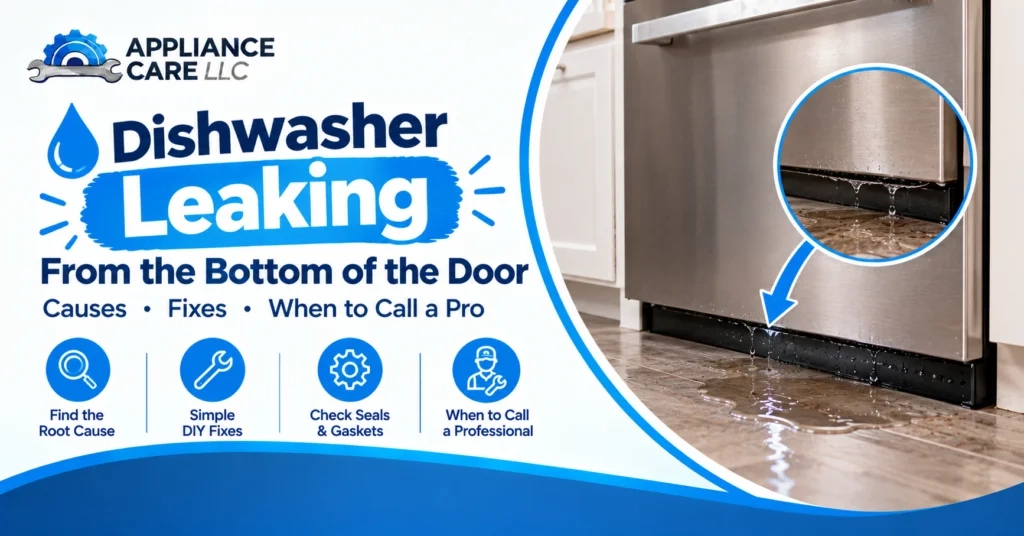
Have you walked into your kitchen and seen cold water? Water leaking from the bottom of the dishwasher door right now is bad. You must stop the water before it ruins your floor.
Understanding Dishwasher Water Leak Repair Costs
A dishwasher leaking from the bottom of the door causes worry. Simple rubber door gaskets cost under fifty dollars online. New lower spray arms cost between thirty and seventy dollars.
Hiring local technicians for complex repairs costs slightly more money. Fixing dishwasher leaks from the bottom quickly saves thousands on ruined kitchen wood floors. Compare minor part costs against buying brand new kitchen appliances.
Checking simple things first saves time and unnecessary repair fees. Clean soft seals before buying expensive replacement parts online. Simple fixes keep your home running smoothly every single day. For a full breakdown of what professional repair typically costs, read our Dishwasher Repair page before deciding whether to DIY or call a technician.
Reasons for Water Leaks Under Your Kitchen Dishwasher Door
Understanding dishwasher door leak causes keeps your kitchen floor dry.
Dirty Rubber Gaskets: Grease covers soft black rubber door seals completely. A Samsung dishwasher leaking from the bottom of the door often stems from dirt. Clean rubber strips lock water inside tubs. A leaky gasket dishwasher is one of the most common and easiest causes to fix at home.
Cracked Lower Spray Arms: Split plastic seams shoot high-pressure water sideways. A KitchenAid dishwasher leaking from the bottom of the door happens with split arms. Swap cracked spray arms to stop water leaking from the dishwasher door.
Unlevel Front Appliance Feet: Forward-tilting frames push water coming out of the dishwasher door toward the edges. Adjust the bottom leveling legs to balance your heavy washing unit.
Loose Door Hinge Screws: Bent steel hinges drop front door panels down. Tighten side hinge screws so doors always close tightly. A dishwasher leaking from the side is often caused by this exact issue.
Excess Soap Suds: Regular liquid dish soap creates thick foam inside. High suds push water past the bottom door seals onto floors. Dishwasher leaking suds from the bottom of the door is almost always caused by using the wrong detergent.
Simple Steps to Fix Front Dishwasher Door Leaks
Stopping water leaking from the bottom of the dishwasher requires basic tools and simple steps.
Clean Rubber Gaskets With Soap
Open the front doors wide to inspect the soft perimeter rubber seals. Wipe away trapped food seeds using warm, soapy washcloths. Scrub stubborn grime using old toothbrushes near bottom corners. Clean dishwasher door seals to keep wash water inside metal tubs safely. According to Consumer Reports appliance repair guidance, a dirty door gasket is the leading cause of a dishwasher leaking from the door and is the first thing to inspect before any other repair.
Inspect Plastic Lower Spray Arms
Pull lower wire dish racks out of main tub tracks. Spin plastic spray arms by hand to check for cracks. Clear clogged spray holes using thin wire paper clips. Working spray arms direct water away from the front door and stop the dishwasher from leaking from the front.
Check Appliance Level From Side Angles
Place short bubble levels along front top metal edges. Adjust front leveling legs using adjustable steel wrenches. Raise front corners slightly so water flows back toward drains. Proper tilt stops water pooling near the front door fast.
Tips to Avoid Front Water Spills
Regular appliance care protects kitchen floors from water leaking under the dishwasher.
Scrape Plates Before Loading: Large food scraps clog bottom tub drain filters. Rinse thick sauces off plates before sliding racks inside. Clean filters keep water draining out before tubs overflow.
Use Correct Detergent Pods: Avoid pouring liquid dish soap into main soap cups. Use auto dishwasher pods to prevent heavy foam creation. Low suds keep water inside the metal tub walls always. Dishwasher leaking soap from the bottom of the door is one of the easiest problems to prevent.
Clean Corner Rubber Baffles: Black corner gaskets collect thick grease over time. Wipe corner baffles clean to maintain tight water seals. Clean baffles stop a dishwasher from leaking from the bottom left corner and bottom right corner.
Avoid Overloading Lower Racks: Large cutting boards block front door latch hooks. Position tall cookie sheets along the metal walls instead. Free door spaces let front gaskets seal tight during washes.
Inspect Float Switches Monthly: Plastic float switches prevent tub water from overfilling. Lift plastic floats by hand to test click sounds. Working float switches stop extra water from rising up doors and causing a dishwasher to leak from the bottom when not running.
Troubleshooting Door Latches and Bottom Gasket Seals
Defective door parts stop appliances from sealing out wash water.
Replace Damaged Bottom Door Seals
Pull worn lower rubber strips out of bottom metal slots. Press new replacement gaskets firmly into bottom door channels. Ensure rubber ends fit snugly without leaving open side gaps. New rubber seals stop front water spills fast. A dishwasher leaking from the bottom of the door stops completely once the dishwasher door seal leak is addressed with a proper replacement gasket.
Tighten Loose Front Door Latches
Check top metal door latches for loose mounting screws. Tighten latch screws using crosshead screwdrivers until firm. Firm latches pull doors tight against rubber tub gaskets. Tight seals prevent water from coming from under the dishwasher.
Fix Worn Front Door Hinges
Heavy outer door panels bend lower metal hinge arms over years. Check side gaps to ensure doors shut straight and flush. Replace bent door hinges to restore factory tight rubber alignment. Straight doors keep water inside the tub during washes and stop the dishwasher leaking from the base.
Deep Dive Into Dishwasher Water Circulation Problems
Internal water movement affects how water hits the front door panels. Water sprays inside tubs at high speeds during wash cycles. Defective water components send streams directly against lower door seams.
How Impeller Blades Force Water Against Door Seals
Water pumps push wash water up into plastic spray tubes. Loose pump impellers create uneven water pressure inside bottom basins. High-pressure waves splash water over the lower door tub lip. Inspect pump housings for cracks to prevent dishwasher leaking underneath.
Checking Internal Water Inlet Valves For Overflow
Electric water inlet valves open to fill bottom tub basins. Stuck inlet valves keep filling tubs past normal water lines. High water levels overflow lower door sills during wash cycles. Replace faulty inlet valves to control tub water fill levels and stop why water is leaking from the dishwasher bottom.
Unclogging Basin Drain Sump Strainers Completely
Food debris drops into lower basin sumps every single cycle. Blocked sump strainers hold dirty water inside lower tub basins. Water builds up fast and causes the dishwasher to leak water underneath. Clean basin strainers weekly to allow fast water drainage always. For guidance on cleaning and maintaining your dishwasher properly between professional service visits, read our Simple Dishwasher Repair Guide.
How Dishwasher Brand Designs Impact Door Leaks
Different dishwasher brands use unique door seal configurations inside tubs. Understanding specific design traits helps locate dishwasher door leaks much faster.
Managing LG Dishwasher Door Seals
An LG dishwasher leaking from the bottom of the door needs seal checks. Flexible lower rubber strips snap into lower door frame tracks. Ensure lower rubber flaps point down into lower tub basins. Correct flap direction stops water running onto kitchen floors and prevents LG dishwasher leaking from the door from recurring.
Fixing Samsung Lower Door Water Seeps
A Samsung dishwasher leaking from the bottom of the door involves seals. Built-in sensor bars detect small water leaks under tubs. Clean lower rubber corner baffles to keep sensors dry always. Fresh door seals prevent automatic leak error codes on displays. A Samsung dishwasher door leaking at the bottom that triggers error codes almost always needs a gasket replacement rather than a sensor repair.
Addressing KitchenAid Spray Arm Deflection
A KitchenAid dishwasher leaking from the bottom of the door needs inspection. Heavy stainless steel spray arms warp under extreme water heat. Warped spray arms hit lower dish racks during wash cycles. Straighten or replace spray arms to stop lower door splashing and fix KitchenAid dishwasher leaking at the bottom of the door permanently.
Preventing Leaks Across Different Home Appliances
Water leak problems happen in various home laundry and kitchen units. Proper care prevents costly floor repairs across your entire home.
Comparing Washer Door Leaks to Dishwasher Leaks
A washing machine leaking from the bottom of the door acts similarly to a dishwasher leaking from the base. Front-load washers use thick rubber door boot gaskets. Trapped lint and coins tear rubber seals on washer doors. Clean rubber door boots weekly to prevent laundry room floods. If your washer is also showing signs of a seal problem, visit our Washer Repair page for the same diagnostic approach applied to washing machines.
Leveling Appliances to Protect Home Subfloors
Unlevel appliances cause water to pool near front access panels. Use spirit levels to check front and side metal panels. Screw adjustable rubber feet up or down to level frames. Level appliances to keep wash water contained inside main tub basins and stop dishwasher leaking from the front bottom.
Checking Drain Hose Connections Under Sinks
Flexible corrugated drain hoses run from appliances to sink drains. Kinked drain hoses slow down dirty water evacuation speeds. High backpressure forces water out of the lower door gasket corners. Straighten rubber drain hoses to keep wastewater flowing out fast. According to This Old House appliance repair guides, a kinked or improperly installed drain hose is one of the most overlooked causes of dishwasher leaking water from underneath that homeowners miss during self-diagnosis.
Preventing Water Damage During Appliance Repairs
Turn off main electric power switches before touching internal wires. Shut off water supply valves under kitchen sinks quickly. Lay thick bath towels around front appliance bases to catch leaks. Keep plastic buckets nearby when pulling off lower access panels. Dry wet floorboards fast using high-speed room fans. Careful prep work keeps kitchen floors safe during home repairs.
DMV Appliance Care Can Help You With Dishwasher Repairs
Appliance Care offers top kitchen equipment repair services daily. We serve homeowners across Alexandria and the DMV area. Our technicians fix dishwashers leaking from the bottom of the door, fridges, stoves, washers, and dryers fast. We provide clear upfront price quotes before starting any work. You never pay hourly fees for our home repair visits.
Certified workers fix an LG dishwasher leaking from the bottom of the door fast. A dishwasher leaking from the bottom of the door gets fixed quickly with the right diagnosis. We offer flexible scheduling choices to fit busy family routines. Visit our Dishwasher Repair page to book your service. For related kitchen appliance issues, our Garbage Disposal Repair and Stove and Cooktop Repair services are available in the same visit. Call Appliance Care at +1 (703) 991-2298 for quick service today.
Everyday Care Rules for Kitchen Dishwashers
Wipe rubber dishwasher door seals with damp cloths every single week. Clean bottom drain filter screens under warm running tap water. Avoid overloading lower dish wire racks with heavy metal pots. Leave doors cracked open after wash cycles to dry seals. Simple care habits keep home kitchen units running like new. For more tips on extending appliance life, read our Simple Appliance Maintenance Tips blog post. According to Family Handyman’s dishwasher maintenance guide, cleaning the door gasket and drain filter monthly eliminates the two most common causes of dishwasher leaking from the bottom before they become a floor-damaging problem.
Conclusion
Water leaking from the bottom of the dishwasher door means dthe oor seals are bad. Clean soft rubber seals using warm water and soap weekly. Check plastic spray arms for small cracks and big clogs. Do not push plates against the front door frame. Call expert repair helpers when metal door hinges get bent. Taking quick steps stops water damage in your home fast. Simple habits keep your kitchen floor dry every single day.
Frequently Asked Questions
Clean trapped debris off rubber gaskets, clear lower spray arms, and level front legs so water drains back into tubs.
No, running leaking appliances risks electrical short circuits, rots subfloors, and causes dangerous mold growth under kitchen floorboards.
Unplug power, pull old rubber gaskets out of lower channels, and press new seals firmly into bottom slots.
A dishwasher leaking from the bottom of the door is most commonly caused by a dirty or worn door gasket, cracked spray arms sending water sideways, an unlevel appliance pushing water toward the front, or excess soap suds overflowing the tub. What causes a dishwasher to leak from underneath is often the same set of issues. Start by cleaning the rubber door seal and checking whether the machine is level before replacing any parts. If the dishwasher door seal leak persists after cleaning, the gasket needs replacement. Visit our Dishwasher Repair page to book a same-day diagnostic if home fixes do not resolve the leak.
Inspect front rubber seals, tighten loose door hinges, use non-foaming detergent, and adjust front leveling feet today.
An LG dishwasher leaking from the bottom of the door is frequently caused by the lower rubber door flap being installed incorrectly or becoming dislodged over time. The flap must point downward into the tub basin to create a proper seal. If the LG dishwasher leaking from the door persists after repositioning the flap, the gasket itself has likely cracked and needs full replacement. Our technicians carry LG-compatible gaskets for same-day repair across the DMV area.
What causes a dishwasher to leak from the bottom when you cannot see an obvious door seal issue usually points to one of three internal problems: a stuck inlet valve overfilling the tub, a blocked drain sump strainer causing water backup, or a cracked pump housing creating internal pressure leaks. Why would a dishwasher leak from the bottom after a normal wash cycle with no door damage is almost always an inlet valve or drain issue. Dishwasher leaking from the bottom when not running specifically points to the inlet valve failing to close completely between cycles. A professional diagnostic identifies which component is failing before you spend money on the wrong part.