
You flip the switch, and nothing happens. When your garbage disposal not working, water and food scraps can back up into the sink within minutes. Whether you call it a garbage disposal, a kitchen sink grinder, a sink food grinder, a food disposal, a dish disposal or a trash disposal, the cause is usually one of three things: a tripped reset button, a jammed grinding plate or a power problem. Some people even call it the sink incinerator or the kitchen crusher. This guide covers the safe checks to try first, why the motor under your kitchen sink suddenly stops working, and when it’s time to call a technician.
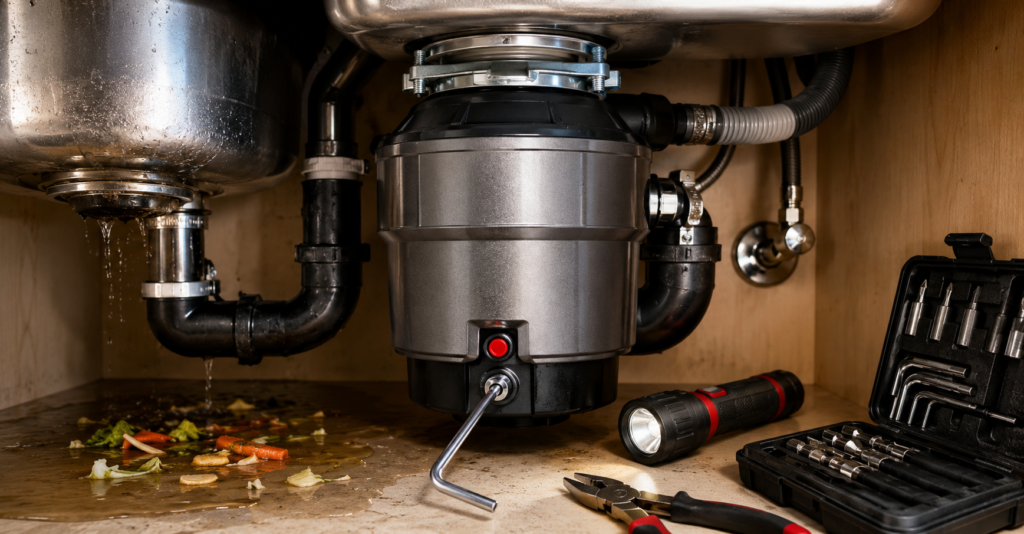
Water pools quickly inside your dirty stainless steel sink bowl. Food scraps sit inside dark kitchen drain pipes right now. Red reset buttons pop out when motors get too hot. Small hex wrenches turn jammed internal blades back and forth. Basic safety checks get your sink equipment running very fast. In this blog post, you will learn easy ways to fix your non-working garbage disposal.
Understanding Appliance Motor Lifespans and Care
Most kitchen sink disposal units last around ten full years. Heavy daily use wears internal motor bearings down over time. Hard water minerals create rust inside metal shredder housing units. Clean units regularly to keep steel blades turning smoothly daily.
Replace old units if water drips from bottom metal casings. Internal seal leaks ruin wood cabinets beneath kitchen sink bases. New modern units run quietly and grind tough food scraps fast.
Understanding basic fix steps prevents costly emergency plumbing service calls. Most simple jams clear in five minutes with basic hex tools. Keep Allen wrenches inside cabinet drawers under kitchen sinks always.
Quick Fixes When Your Kitchen Sink Disposal Is Not Working
Fixing a cold garbage disposal takes simple step checks. Press the small red reset button under your unit base. Check the wall plug or main circuit breaker if silent. Use a hex wrench underneath to free jammed motor blades.
Basic Power Checks
- Check the wall switch and plug: Make sure the plug fits tight inside cabinet wall outlets.
- Press the reset button: Push the red base button inward until it clicks firmly.
- Check the circuit breaker: Flip tripped circuit breakers back on inside main electrical panels.
Clearing a Jam
- Turn off all power: Unplug cabinet power cords before touching dark interior drain parts.
- Use an Allen wrench: Insert quarter-inch hex wrenches into bottom base center holes. Rotate wrenches back and forth until internal steel plates spin free.
- Remove debris: Pull out trapped food bits using long metal needle nose pliers. Never put human fingers inside dark metal sink drains ever.
Why Your Garbage Disposal Stopped Working
Understanding why your sink unit stopped running saves repair time.
- Tripped Red Thermal Reset: Electric motors shut off when internal coils overheat fast. A garbage disposal not working but has power often needs reset buttons pushed. Press red buttons under base units to fix current flow.
- Jammed Steel Shredder Plates: Hard fruit seeds wedge between spinning plates and walls. A garbage disposal humming but not working means jammed internal blades. Use hex wrenches underneath units to free stuck steel plates.
- Tripped Main Breaker Switches: Electric surges trip wall panel breakers during heavy storms. A garbage disposal not working after a power outage points to tripped breakers. Flip breaker switches off and on inside main electric boxes.
- Unplugged Cabinet Power Cords: Loose plugs slip out of wall outlets under counters. A garbage disposal not running might just be unplugged. Push black power plugs in firmly to restore unit electricity.
- Burned Electric Motor Coils: Old units burn out after ten years of use. Completely dead motors make zero noise when switches flip. A garbage disposal not working means replacing burned units when reset buttons fail.
How to Free Jammed Shredder Blades Safely
Clearing trapped food scraps requires careful steps and correct tools.
Disconnect Unit Electric Power Sources
Unplug power cords from wall outlets beneath kitchen sink cabinets. Flip wall circuit breaker switches off for total home safety. Verify power loss by flipping kitchen wall switches twice daily.
Insert Hex Wrenches Into Bottom Base Holes
Locate tiny hex holes on bottom metal center plate bases. Insert quarter-inch Allen wrenches firmly into small center holes. Turn wrenches back and forth until internal plates spin free.
Remove Loose Scraps Using Metal Pliers
Look inside top rubber splash guards with bright flashlights. Use long needle nose pliers to grab hard fruit seeds. Never place human fingers inside dark metal disposal drains.
Simple Care Steps for Long Appliance Life
Simple daily habits stop unexpected sink blockages in your kitchen.
- Run Cold Tap Water: Cold water hardens fats, so blades chop grease easily. Keep cold water running five seconds after turning units off. Cold water carries ground food down main sewer pipes fast.
- Grind Fresh Citrus Peels: Lemon peels clean internal steel blades and remove smells. Chop whole lemons into tiny pieces before dropping peels inside. Citrus oils make kitchen sinks smell fresh every single week.
- Avoid Fibrous Food Scraps: Celery stalks wrap tightly around spinning center motor shafts. Throw corn husks and banana peels inside trash cans instead. Simple trash habits prevent motor jams inside dark sink drains.
- Avoid Pouring Grease Down: Hot cooking oil hardens inside cold plastic drain pipes. Hardened grease traps small food bits and stops water flow. Pour hot bacon grease into old tin cans instead daily.
- Use Ice Cubes and Salt: Drop ten ice cubes into drain slots with salt. Turn units on to scrape hard mineral scale off walls. Ice washes internal steel parts without using harsh drain chemicals.
Garbage Disposal Won’t Turn On? Check the Power and Wall Switch
Electrical issues stop power from reaching your sink disposal unit.
Check Wall Outlets Under Sink Counters
Plug small table lamps into cabinet wall outlets under sinks. Test if outlets give electric power to other home devices. Replace broken wall outlets if lamps fail to light up.
Not every disposal plugs into an outlet. A hardwired garbage disposal is wired straight into a junction box on the unit, so there is no plug to check. If a hardwired garbage disposal is not working, check the breaker at your electrical panel and the wall switch first. Don’t open the junction box yourself. Loose or burned wiring inside it should be handled by a qualified technician or electrician.
Inspect Red Overload Buttons Under Base Units
Most disposals, including InSinkErator and Whirlpool models, have a small red or black reset button on the bottom of the unit. If your InSinkErator is not working and the button has popped out, wait about 10 minutes for the motor to cool, press the button firmly until it clicks, then run cold water and turn the disposal on. If the button keeps tripping, something is jammed inside or the motor is overheating.
Feel under metal unit bases for small raised plastic buttons. Push popped red buttons inward until metal springs click tight. Pop sounds mean internal electric breakers reset back to normal.
Test Wall Toggle Switches on Kitchen Walls
Old wall switches lose internal metal contacts over long periods. Replace worn wall switches if kitchen lights flicker during use. New wall switches restore steady electric current to sink motors.
Garbage Disposal Not Working After a Power Outage
A garbage disposal that stopped working right after a power outage or storm has usually lost power somewhere between the electrical panel and the unit. Start at the panel and reset any tripped breaker labeled for the kitchen or disposal. Next, check whether the disposal plugs into a GFCI outlet under the sink or on the counter, and press its reset button if it has popped. Finally, push the red reset button on the bottom of the disposal. A power surge can trip the motor’s overload protector even when the breaker looks fine. If the unit still has no power, or it hums without spinning, the motor or wiring may have been damaged and should be checked by a technician.
What Never to Put Down Sink Disposals
Certain food items ruin internal blades and block drain pipes.
- Dry White Rice Grains: Rice expands inside dark water pipes and blocks drain lines.
- Coffee Grounds Buildup: Fine coffee grounds pack tight like heavy dark sand.
- Large Chicken Bones: Hard animal bones break internal metal shredder ring teeth.
- Potato Peel Coatings: Sticky potato skins turn into thick paste inside drains.
- Eggshell Inner Membranes: Thin egg membranes wrap around lower rotating center impellers.
Garbage Disposal and Dishwasher Not Working at the Same Time
In many kitchens, the dishwasher drains through the garbage disposal, and the two may share a circuit. So when the garbage disposal and dishwasher are both not working, look for a shared cause. A tripped breaker or GFCI outlet can cut power to both. A clog in the disposal or the drain line below it can stop the dishwasher from draining and leave standing water in the tub. If you recently installed a new disposal, check that the knockout plug inside the dishwasher inlet was removed. When both appliances fail together and the power checks don’t help, a technician can trace whether the problem is electrical or a drain blockage.
How DMV Appliance Care Can Help You
Appliance Care helps with all home kitchen equipment repair needs. We serve homeowners across Alexandria and the DMV area. Our technicians fix stoves, fridges, washers, and dishwashers fast. We serve clients with total honesty and clear communication always. We never charge hourly fees for home service repair visits. Your repair estimate stays low and clear upfront before work. Certified workers fix garbage disposal not working issues using modern tools. We offer flexible schedules to fit busy family routines daily. Call Appliance Care at +1 (703) 991-2298 for reliable service. If your disposal hums but won’t spin, see our step-by-step guide to fixing a garbage disposal that hums but won’t grind.
Everyday Care Rules for Kitchen Sink Equipment
Wipe food grease off rubber splash guards with damp rags. Check cabinet floor spaces under kitchen sink pipes every week. Run cold tap water before turning on sink disposal units. Clear hard grease using ice cubes once every single month. Simple care habits keep home appliances running like brand new.
Conclusion
Unclogging sink drains keeps kitchen sinks clean every single day. Always press bottom reset buttons before paying for new equipment. Use metal hex wrenches to spin jammed internal blades free. Never put bare hands inside dark kitchen drain pipes ever. Call local technicians when electric motors fail to start up. Simple habits stop unexpected sink drain blockages at home.
Frequently Asked Questions
Unplug power first, insert a hex wrench into the bottom base hole, and turn it back and forth to clear jammed blades.
Units stop due to tripped red reset buttons, jammed shredder plates, blown wall circuit breakers, or loose cabinet power plugs
Locate the small red or black button on the bottom metal base under your sink and press it inward until it clicks.
Most home units last between eight and twelve years depending on usage habits, water quality, and regular cleaning care.
Plumbers usually charge between 150 and 300 dollars for labor, plus the cost of the new disposal unit itself.
No, boiling water melts fat deposits, which later harden deeper inside pipes, so use cold water during grinding cycles instead.
If your garbage disposal won’t turn on and makes no sound at all, it isn’t getting power. Press the reset button on the bottom of the unit, check for a tripped breaker or GFCI outlet, and make sure the plug under the sink is fully seated. If it still won’t turn on after those checks, the wall switch or the motor may have failed.
A power outage or surge can trip the breaker, a GFCI outlet or the disposal’s own overload protector. Reset the breaker first, press the GFCI reset button, then press the red reset button under the disposal. If the unit still has no power after all three, have a technician check the motor and wiring for surge damage.
First rule out the disposal itself by pressing its reset button and checking the breaker. If the disposal plugs in, test the outlet with a lamp while the wall switch is on. If the outlet stays dead with the switch on and the breaker is fine, the wall switch or its wiring likely needs to be replaced.
They often share a drain connection and sometimes the same circuit. A tripped breaker can shut off both, and a clogged disposal can stop the dishwasher from draining. Reset the breaker, clear any jam in the disposal, and run hot water through it. If the dishwasher still won’t drain, the shared drain line may be blocked.