How to fix washing machine not draining water is the first question that comes to mind when you open the door to find cold, dirty water sitting inside. Sopping wet clothes sit trapped inside your tub right now. A washing machine not draining causes big laundry day stress. You must fix this water problem before clothes start to smell.
Small coins and stray socks often clog internal drain lines. Dirty grey water ruins clean clothes if it sits inside dark tubs. You do not need expensive repair visits for simple water clogs. Basic tools help clear rubber drain hoses under your washing machine fast. In this blog post, you will learn easy ways to fix your draining problem.
Understanding Drain Pump Replacement Costs
Electric drain motors wear out after eight years of use. Burning smells during drain cycles mean motor coils have failed completely. Replacement pump parts cost between fifty and one hundred dollars.
Installing new pumps takes under one hour with simple tools. Unplug power wires before touching bottom motor wire terminal ends. New electric pumps push dirty water out quickly every cycle.
Knowing how to fix a washing machine not draining saves money. Simple checks resolve basic water flow issues without service visits. Keep basic tools near laundry rooms for fast emergency repairs.
Common Causes of Laundry Drain Blockages
Understanding why water stays inside your tub saves time.
Clogged Pump Filters: Small coins and lint block bottom filter screen traps. A top-load washing machine not draining often has debris. Clean bottom lint filters to let water flow out fast.
Kinked Rear Hoses: Bent rubber tubes block wastewater from leaving home tubs. Inspect rear black hoses behind your heavy metal washing unit. Straighten bent rubber drain lines to restore normal water flow.
Broken Lid Switches: Faulty top lid latches stop spin and drain cycles. A washing machine not draining or spinning points to bad switches. Replace worn plastic lid catches to keep cycles running smoothly.
Worn Pump Belts: Loose rubber belts slip off bottom motor drive pulleys. Slipping drive belts prevent internal drain impellers from spinning fast. Tighten loose motor belts to help pumps remove dirty water.
Blocked House Pipes: Clogged wall drain pipes push wastewater back into tubs. Clear home sewer lines using long steel plumbing drain snakes. Unclogged wall pipes let dirty wash water drain away.
How to Fix Washing Machine Not Draining: Simple Filter Steps
Clearing blocked filters requires basic tools and simple care steps.
Drain Standing Water Manually
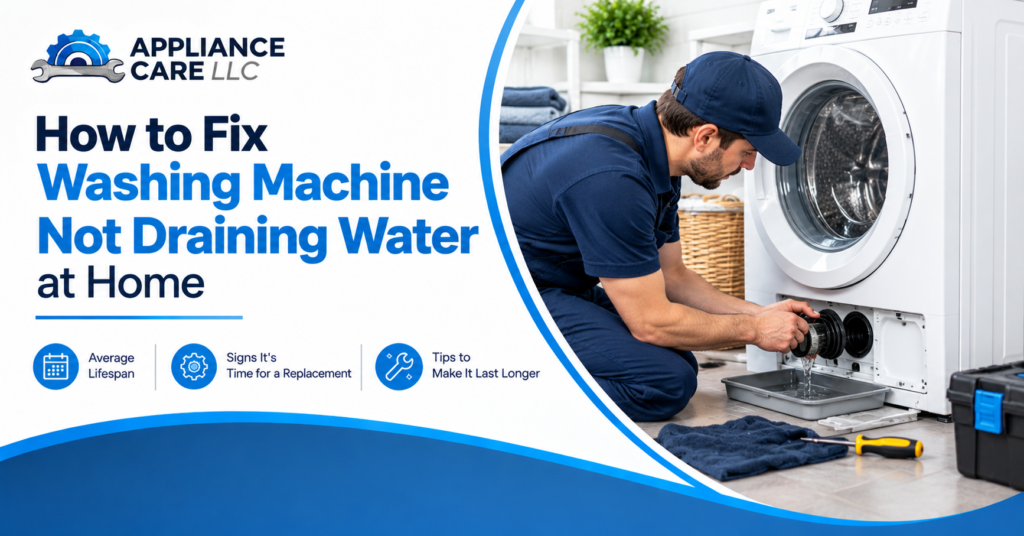
Unplug power cords from wall outlets behind your laundry machine. Place shallow plastic pans underneath front filter access doors today. Use small rubber hoses to drain trapped water into buckets.
Remove and Clean Filter Traps
Turn round filter caps counterclockwise to pull screens out. Rinse trapped lint, hair, and small coins under hot water. Wipe inner filter housing holes clean with damp cotton rags.
Reinstall Clean Pump Filters
Push clean filter screens back inside bottom housing metal tubes. Twist plastic caps clockwise until outer seals lock in tight. Screw caps tight to stop water leaks on laundry floors.
Tips to Prevent Future Washer Clogs
Regular maintenance keeps your laundry equipment working like brand new.
Check Clothing Pockets: Metal keys and loose coins ruin internal drain pumps. Empty all pant pockets before dropping clothes inside metal tubs. Small paper clips jam plastic drain impellers very fast daily.
Use Garment Mesh Bags: Tiny baby socks slide down tub edges during wash cycles. Wash small items inside zippered cloth mesh laundry bags always. Cloth bags stop stray socks from clogging bottom drain lines.
Clean Coin Traps Monthly: Lint mixes with soap scum to block bottom pump filters. Pull front filter screens out for quick hot water rinses. Clean filter screens keep drain water moving out without delays.
Avoid Overloading Tubs: Packing heavy wet towels strains internal motor belt drives daily. Divide large laundry piles into two smaller balanced wash loads. Light loads help drain pumps push water out much faster.
Use Correct HE Soap: High efficiency soaps create fewer foam suds inside tubs. Heavy soap suds confuse internal water level pressure sensor switches. Low suds soaps help machines drain dirty water cleanly always.
Fixing Door Latches and Drain Line Hoses
Damaged parts stop washing machines from completing daily wash cycles.
Inspect Rear Rubber Hose Connections
Pull your laundry unit away from rear drywall surfaces carefully. Check black rubber hoses for sharp bends or flattened spots. Replace old cracked rubber lines with strong rigid plastic hoses.
Test Plastic Door Latch Switches
Close front-loading doors firmly to test internal electric locks. Broken door latches keep drain pumps from starting spin cycles. Install new door safety switches to restore normal drain functions.
Check Main House Standpipe Heights
Ensure rear drain hoses do not sit too deep inside. Pushing hoses too far down creates dangerous water siphon effects. Keep drain hoses elevated above tub water levels at all times.
Preventing Water Spills During DIY Repairs
Working on full wash tubs risks messy laundry room floods. Always keep thick bath towels nearby before loosening lower hoses. Lay old blankets across hardwood floors to absorb sudden leaks.
Disconnect main power cords before opening lower metal access panels. Turn water supply valves off to prevent unexpected hose bursts. Careful prep work keeps your home dry during machine repairs.
How DMV Appliance Care Can Help You
Appliance Care offers top home laundry unit repair services daily. We serve clients across Alexandria and the whole DMV area. Our technicians fix washers, dryers, fridges, stoves, and dishwashers fast.
We provide clear upfront price estimates before starting any work. You never pay hourly fees for our home repair visits. Certified technicians know how to fix washing machine not draining water problems. We offer flexible scheduling options to fit your busy life. Call Appliance Care at +1 (703) 991-2298 for quick help today.
Everyday Rules for Home Laundry Units
Check rear rubber drain hoses for kinks every single month. Clean bottom lint filter screens under warm tap water regularly. Avoid using excessive liquid soap to prevent heavy suds buildup. Leave front washer doors open to dry rubber tub seals. Simple habits keep home laundry machines running like brand new.
Conclusion
Clogged drain lines cause dirty water to pool inside tubs. Always check small bottom pump filters before buying new parts. Unclogging rubber hoses keeps home laundry units running like new. Avoid overloading washer tubs with heavy blankets during weekly loads. Call local technicians when electric drain pumps stop running completely. Simple care steps prevent big water spills on laundry floors.
Frequently Asked Questions
Unplug the power, place shallow pans underneath, and use small drain hoses near bottom filters to empty trapped water.
Remove the lower access panel, unscrew the pump filter cap, and clear out trapped lint, coins, or stray socks.
Cancel current cycles, select drain or spin settings on control dials, and restart the machine to engage electric pumps.
Common causes include clogged pump filters, kinked rear drain hoses, worn motor belts, or broken door safety switches.
Unplug power cords for five minutes, reconnect power, then open and close the top lid six times rapidly.