Introduction
Most washing machines do not fail without warning. In almost every case, the appliance sends signals weeks or even months before a complete breakdown occurs. The problem is that most homeowners either do not recognize these signals or assume they can ignore them a little longer.
By the time the machine stops working entirely, what could have been a single-component repair has often become a more extensive job. Recognizing these seven warning signs early is the most effective way to prevent an expensive surprise, and keep your laundry routine running without interruption.
1. Clothes Are Still Wet After a Full Spin Cycle
A washing machine that completes its spin cycle but leaves clothes soaking wet is failing at one of its most basic functions. The most common causes include a worn drive belt, a failing motor, worn drum bearings, or a drainage problem that prevents the machine from reaching full spin speed.
If you are regularly running a second spin cycle to remove excess water, the machine is already working around a developing fault. That fault will not improve on its own.
2. The Machine Leaks During or After a Cycle
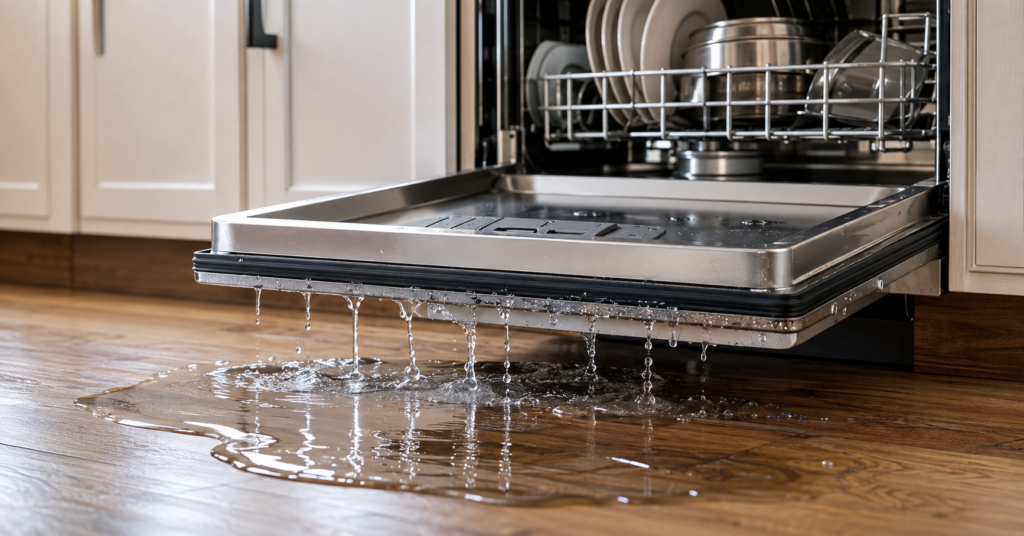
Any water you find on the floor near the washing machine deserves immediate attention. Leaks most often come from a deteriorating door gasket on front-load models, a cracked or loose water supply hose, a faulty drain pump, or an overloaded tub that overflows during agitation.
A small leak can saturate subfloor material and drywall surprisingly quickly. If you find water, turn off the water supply valves behind the machine and call for washing machine repair before using it again.
3. Loud Banging or Grinding Noises
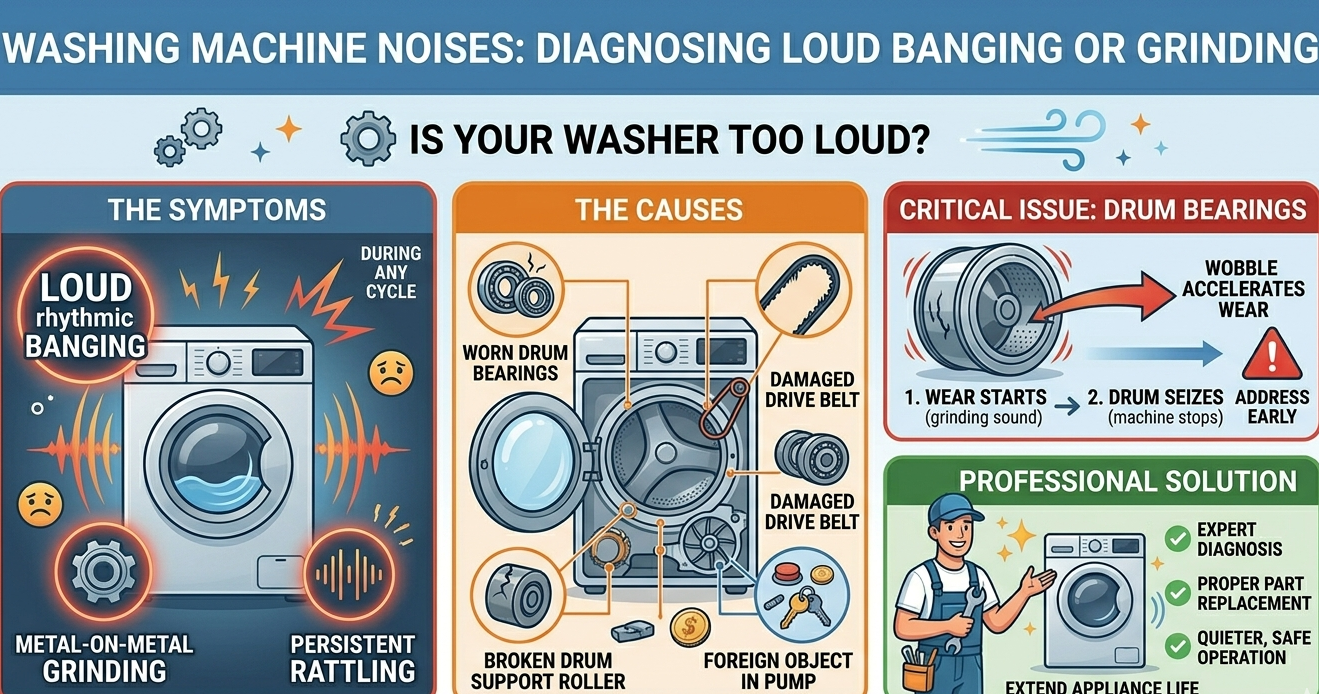
Some movement noise during the spin cycle is normal. Loud rhythmic banging, metal-on-metal grinding, or persistent rattling during any part of the cycle is not. These sounds typically indicate worn drum bearings, a damaged drive belt, a broken drum support roller, or a foreign object caught in the pump.
Bearings are a particularly important issue to address early. A worn bearing allows the drum shaft to wobble, and that wobble accelerates wear on every surrounding component. What starts as a grinding sound becomes a seized drum if left unaddressed.
4. The Machine Vibrates Excessively
All washing machines vibrate during the spin cycle. A machine that shakes violently, walks across the floor, or thumps repeatedly during spinning is experiencing a problem beyond normal operation.
Common causes include an unbalanced load, worn shock absorbers, a damaged suspension system, or a machine that is not sitting level on the floor. Shock absorber failure is particularly common in machines over five years old and is a straightforward repair.
5. Water Does Not Drain Completely
Standing water left in the drum after a cycle indicates a drainage problem. The most frequent causes are a clogged drain pump filter, a blocked drain hose, or a failing pump motor. Many front-load washers have a cleanable filter that most homeowners never access; clearing it resolves a significant number of drainage complaints.
Running a cycle with standing water remaining in the drum puts heavy strain on the pump motor. Continued operation without addressing the drainage issue almost always leads to pump failure.
6. Error Codes on the Display
Modern washing machines display error codes when their sensors detect abnormal conditions. Codes like F21, E3, UE, dL, and others each point to a specific system within the appliance. These codes are not suggestions; they are the machine telling you something has been detected as outside normal operating parameters.
Looking up the code for your specific model is a good first step. If the condition persists after attempting the basic reset procedure in your owner’s manual, a technician should diagnose the root cause rather than simply clearing the code.
7. A Musty or Burning Smell
A musty smell from a washing machine usually indicates mold or mildew growth inside the drum, door gasket, or detergent drawer, common in front-load machines that are kept closed between uses. Regular cleaning cycles and leaving the door ajar after use prevents this.
A burning smell is more urgent. It typically indicates motor strain, a slipping belt, or electrical component overheating. If you detect a burning smell during a cycle, stop the machine immediately and call for repair before using it again.
Ready to schedule a repair? Contact DMV Appliance Care today. We serve the entire DMV area (DC, Maryland & Virginia). Call us at +1 (703) 991-2298 for fast, same-day appliance repair.
Frequently Asked Questions