Introduction:
A dishwasher is supposed to clean things. So when it develops a persistent foul odor, it feels deeply counterintuitive. You open the door and a smell of rotting food, mildew, or sewage greets you instead of clean dishes.
The frustrating part is that wiping down the inside with a sponge does not fix it. The smell returns within days. That is because dishwasher odors almost always originate from hidden locations that require targeted attention: and sometimes professional appliance repair.
This guide explains the most common sources of dishwasher odors and walks through both DIY solutions and situations where a technician from DMV Appliance Care should take a look.
The Most Common Causes of Dishwasher Odors
Clogged or Dirty Filter
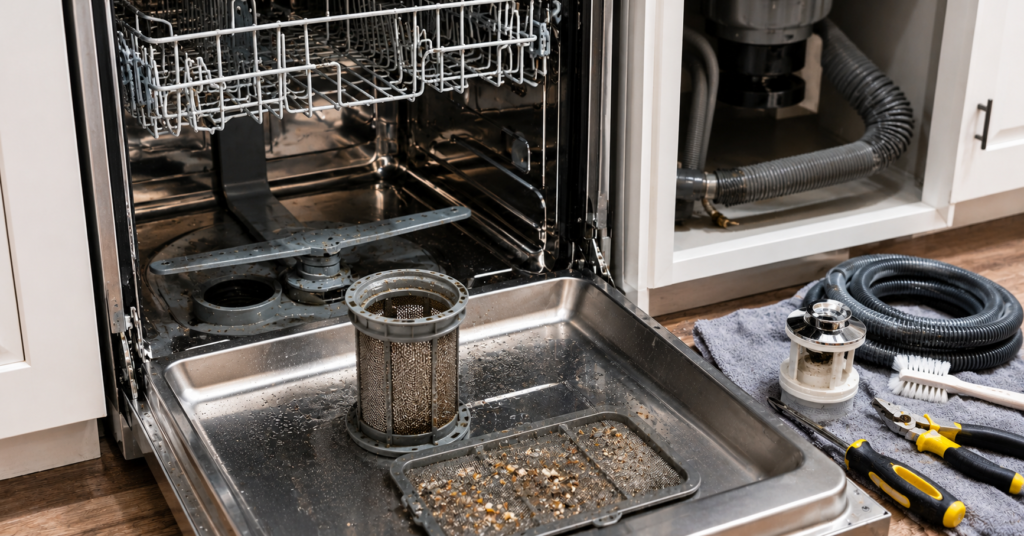
Modern dishwashers use a filter system at the bottom of the wash basin to catch food particles before they recirculate onto dishes. This filter traps everything from bits of food to grease to mineral deposits.
An uncleaned filter is the single most common cause of dishwasher odors. The trapped food decomposes over time, and every wash cycle spreads warm, humid air over it, accelerating bacterial growth. The result is a sour, rotten smell that permeates the entire appliance.
Locate the cylindrical filter assembly at the bottom of your dishwasher. Twist it counterclockwise to remove it. Rinse it under warm water and use a soft brush to clean the mesh screen. For heavy buildup, soak the filter in warm soapy water for ten minutes before scrubbing.
Monthly filter cleaning prevents most dishwasher odor problems before they develop.
Blocked Drain and Standing Water
If water is not draining completely from the dishwasher after each cycle, standing water collects in the bottom of the tub. Stagnant water becomes a breeding ground for bacteria and mold within hours.
Check the bottom of your dishwasher after a complete cycle. You should not see any water pooling. A small amount of water in the very bottom channel near the filter is normal: a visible puddle is not.
Blocked drains are caused by clogged filters, kinked drain hoses, or a failing drain pump. If cleaning the filter does not resolve standing water, a technician needs to inspect the drain system.
Mold and Mildew on the Door Gasket
The rubber door gasket creates a watertight seal around the dishwasher door. Its folds and crevices trap moisture after every cycle. In a dark, humid environment, mold and mildew grow rapidly.
Pull back the folds of the door gasket and inspect them closely. Black, green, or brown discoloration indicates mold growth. Clean the gasket with a solution of one cup white vinegar and one cup warm water applied with an old toothbrush. Work it into all the folds.
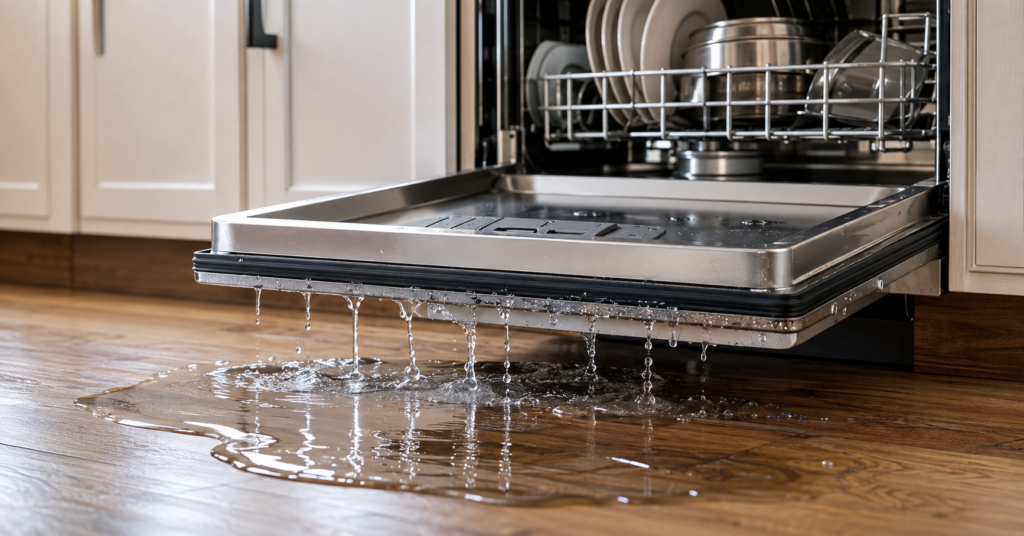
If the gasket has deteriorated or cracked, it needs replacement. A damaged gasket may also allow water to leak from the door and should be addressed regardless of the odor issue.
Spray Arm Blockages
The rotating spray arms distribute water throughout the dishwasher during each cycle. The small holes in the spray arms can become blocked with mineral deposits, food particles, or grease. Blocked holes reduce water pressure and leave areas of the dishwasher: including the filter and drain area: inadequately rinsed.
Remove the spray arms according to your dishwasher manual. Use a toothpick to clear each individual spray hole. Rinse the arms thoroughly before reinstalling.
Food Buildup in Hidden Interior Areas
Food debris collects in areas beyond the filter: around the door hinge channels, along the bottom tub edges, under the door, and inside the utensil basket holders. These areas often go years without cleaning.
Run a cycle with a dishwasher cleaning tablet or two cups of white vinegar placed in a dishwasher-safe bowl on the bottom rack. This loosens buildup from interior surfaces and flushes it through the drain system.
Sewer Gas or Drain Connection Problem
A sewage or sulfur smell that persists after thorough cleaning may indicate a problem with the drain connection rather than the dishwasher itself. If the dishwasher drain hose lacks a proper high loop or air gap, sewer gases can migrate backward through the drain connection into the appliance.
A technician can inspect the drain hose routing, verify the air gap is properly installed, and check for any siphoning issues in the plumbing connection.
Step-by-Step Dishwasher Odor Elimination
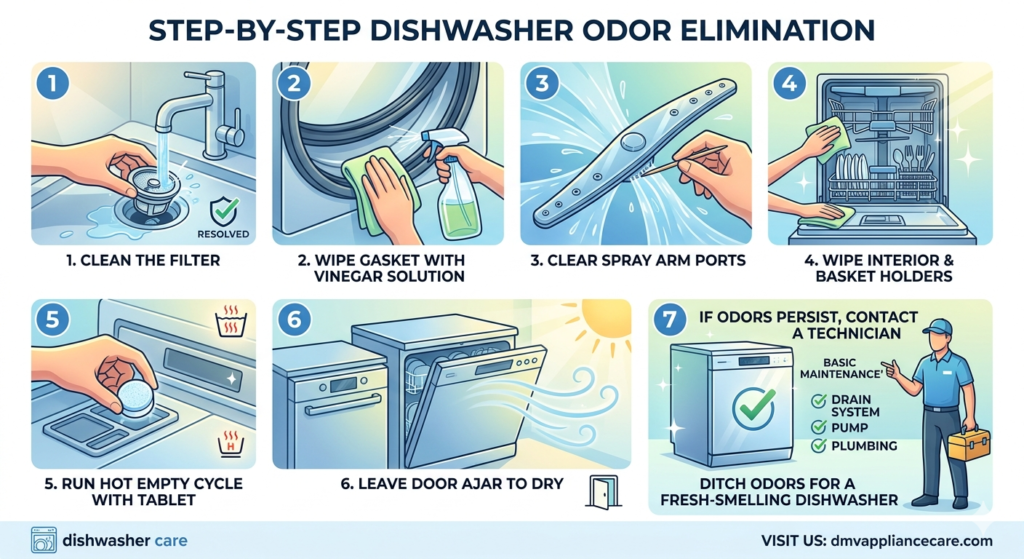
- Remove and clean the filter: this alone resolves most odor problems
- Wipe down the door gasket in all folds with a vinegar-water solution
- Clear the spray arm ports with a toothpick
- Wipe the interior walls, door edges, and utensil basket holders with a damp cloth
- Run an empty hot wash cycle with a dishwasher cleaner tablet
- Leave the door slightly open after each cycle to allow interior drying
If odors persist after completing all of these steps, contact a dishwasher repair technician to inspect the drain system, pump, and plumbing connection.
Preventing Future Dishwasher Odors
- Scrape plates before loading but avoid pre-rinsing: enzymes in dishwasher detergent need food particles to activate properly
- Clean the filter monthly
- Run the dishwasher at least three times per week: infrequent use allows water to stagnate
- Leave the door ajar after the drying cycle when possible
- Use rinse aid to improve drying and reduce moisture retention
Ready to schedule a repair? Contact DMV Appliance Care today. We serve the entire DMV area (DC, Maryland & Virginia). Call us at +1 (703) 991-2298 for fast, same-day appliance repair.
FAQ’s