Introduction:
A gas stove burner that clicks repeatedly but never lights, or one that lights inconsistently, is more than just annoying. It can slow down meal preparation significantly and, in some cases, create a safety concern if gas flows without igniting.
Gas stove ignition problems are among the most common stove repair calls our technicians handle across the DMV area. Most ignition failures come from a small number of identifiable causes that a trained technician can diagnose and resolve quickly. This guide explains each one.
How Gas Stove Ignition Works
Gas cooktops use a spark ignition system. When you turn the burner knob, two things happen simultaneously: the gas valve opens to allow fuel flow, and the spark module sends electrical pulses to the igniter electrode next to the burner. The spark ignites the gas, and a flame forms around the burner cap.
Each burner has its own igniter. A single spark module typically controls all burners and creates the clicking sound you hear when any burner knob is turned.
Most Common Causes of Burner Ignition Failure
Food Debris Clogging the Burner Ports
This is the leading cause of gas burner ignition problems. Cooking splatter, boiled-over liquids, and food particles collect around the burner cap and ports over time. When the ports: the small holes from which gas exits the burner: become blocked, gas cannot flow freely enough to ignite consistently.
A burner with clogged ports may ignite on one side but not another, produce a weak or uneven flame, or click repeatedly before lighting. The fix involves cleaning the burner cap and base thoroughly.
Remove the burner grate and cap and soak them in warm soapy water. Use a toothpick or thin wire to clear individual ports. Never use a toothpick inside the port while the burner is assembled and the stove is connected to gas.
Wet or Dirty Igniter
The igniter electrode sits directly beside the burner and is exposed to cooking moisture, spills, and grease every time the stove is used. A wet igniter cannot create a strong spark. This is why burners often fail to ignite immediately after cleaning the cooktop with water or after a boilover.
After cleaning, dry the igniter area thoroughly with a soft cloth. Allow the cooktop to air dry completely before attempting to light the burners. A hair dryer set to low can help dry stubborn moisture around igniters.
If the igniter is coated with years of grease buildup, cleaning alone may not restore function. A technician can test igniter spark output and replace a failed electrode.
Faulty Spark Module
The spark module is the electronic component that generates the high-voltage pulses that create sparks at the igniter electrodes. When the spark module fails, you may notice that no burners click at all, or that all burners click continuously even when no knob is turned.
Continuous clicking with all knobs off is a common spark module symptom. It often happens after a large spill that reaches the electronic components under the cooktop surface. Once the module dries, clicking may stop: but the module may be permanently damaged.
Spark module replacement requires accessing the components under the cooktop and is a job for a qualified stove repair technician.
Damaged Igniter Electrode or Wire
The igniter electrode can crack from thermal stress over time. The wiring that connects the spark module to each electrode can also burn, melt, or disconnect. A damaged electrode produces a weak or absent spark at one specific burner while all other burners ignite normally.
Replacing a single electrode is a targeted repair that restores full function to the affected burner without replacing the entire spark system.
Gas Valve Problems
Less commonly, the problem is not with the ignition system at all but with the gas valve that controls fuel flow to a specific burner. A gas valve that fails to open fully results in insufficient gas flow, which means the spark ignites but the flame is too weak to sustain and immediately goes out.
Important: If you smell gas and a burner will not ignite, do not attempt to troubleshoot the problem yourself. Leave the home, avoid operating any switches, and call your gas utility company and a qualified gas stove repair technician immediately.
Gas Stove Maintenance to Prevent Ignition Problems
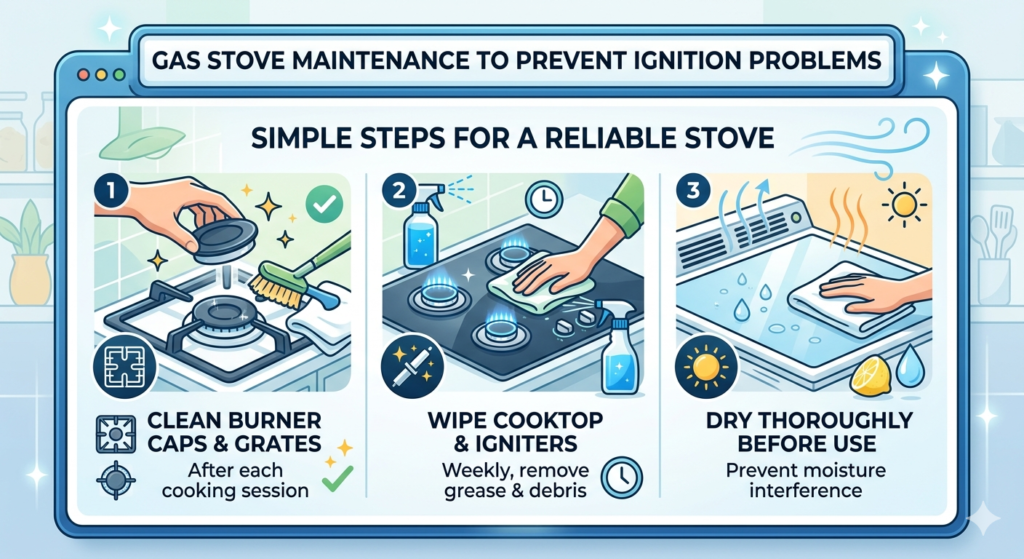
- Clean burner caps and grates after each cooking session
- Wipe down the cooktop surface and around igniters weekly
- Dry the cooktop thoroughly after cleaning before using the stove
- Clear burner ports with a toothpick monthly if you cook frequently
- Have the gas connections and burner valves inspected professionally every two years
When One Burner Works But Others Don’t
A pattern where some burners ignite and others do not narrows the diagnosis significantly. If a single burner fails while others work, the problem is isolated to that burner’s electrode, cap, or gas port. If multiple burners fail simultaneously, the spark module or a shared wiring connection is more likely the cause.
Ready to schedule a repair? Contact DMV Appliance Care today. We serve the entire DMV area (DC, Maryland & Virginia). Call us at +1 (703) 991-2298 for fast, same-day appliance repair.
FAQs