Introduction:
Most homeowners call an appliance repair service only after something breaks. The dishwasher floods the kitchen, the refrigerator stops cooling, or the dryer takes three cycles to dry one load. By that point, what started as a minor problem has often become a major repair.
Preventive appliance servicing works exactly like preventive car maintenance. You do not wait for your engine to fail before changing the oil. The same logic applies to your household appliances: and the financial benefit is just as real.
This guide outlines how often each major home appliance should receive professional attention, what routine service includes, and why scheduling proactive maintenance with DMV Appliance Care saves money in the long run.
Refrigerator: Every 12 to 24 Months
Your refrigerator operates continuously, making it one of the highest-priority appliances for preventive maintenance. Annual or biennial professional service should include the following.
- Condenser coil cleaning to restore cooling efficiency and reduce energy use
- Door seal inspection and replacement if needed
- Evaporator fan inspection for airflow problems
- Defrost system testing including heater, thermostat, and timer
- Temperature calibration check across both compartments
- Ice maker and water dispenser inspection if equipped
Homeowners with pets produce more airborne pet hair, which accelerates condenser coil clogging. In these households, annual professional coil cleaning is strongly recommended.
Washing Machine: Every 12 to 18 Months
Washing machines handle heavy, repetitive mechanical loads. Professional service should check the following components on an annual basis.
- Drain pump operation and filter condition
- Inlet hose condition: rubber hoses should be replaced every five to seven years
- Door gasket condition on front-load machines
- Drum bearing play: early bearing wear is diagnosable before noise begins
- Drive belt tension and condition
- Control board function and error code history
Many washing machine failures that result in water damage and expensive floor repair stem from a burst or leaking inlet hose. Annual hose inspection is one of the most cost-effective preventive steps a homeowner can take.
Dryer: Annually for Vent Cleaning, Every 24 Months for Full Service
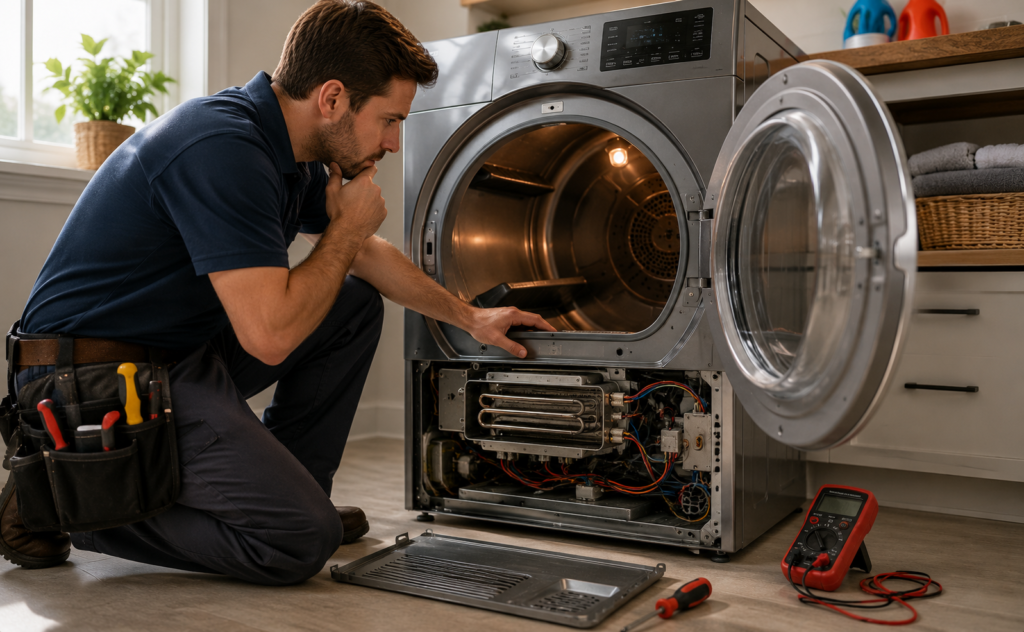
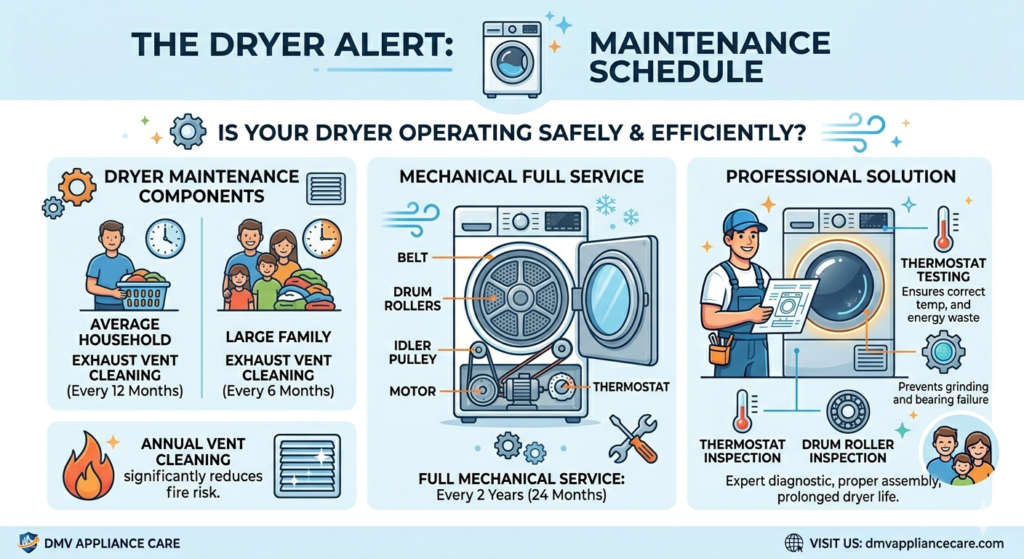
Dryer maintenance has two distinct components. The exhaust vent system should be professionally cleaned every 12 months for average households and every six months for large families with heavy laundry use. Full mechanical service: covering the belt, drum rollers, idler pulley, motor, and thermostat: should happen every two years.
- Annual vent cleaning significantly reduces fire risk
- Drum roller inspection prevents the grinding noises that precede bearing failure
- Thermostat testing ensures the dryer does not overheat clothes or waste energy
Dishwasher: Every 18 to 24 Months
Dishwashers experience moderate mechanical stress. Professional service should include checking the spray arm ports for mineral buildup, testing water heating element function, inspecting the door gasket and latch, and testing drain pump operation. Many dishwasher service calls can be combined with refrigerator service for efficiency.
Oven and Range: Every 24 Months
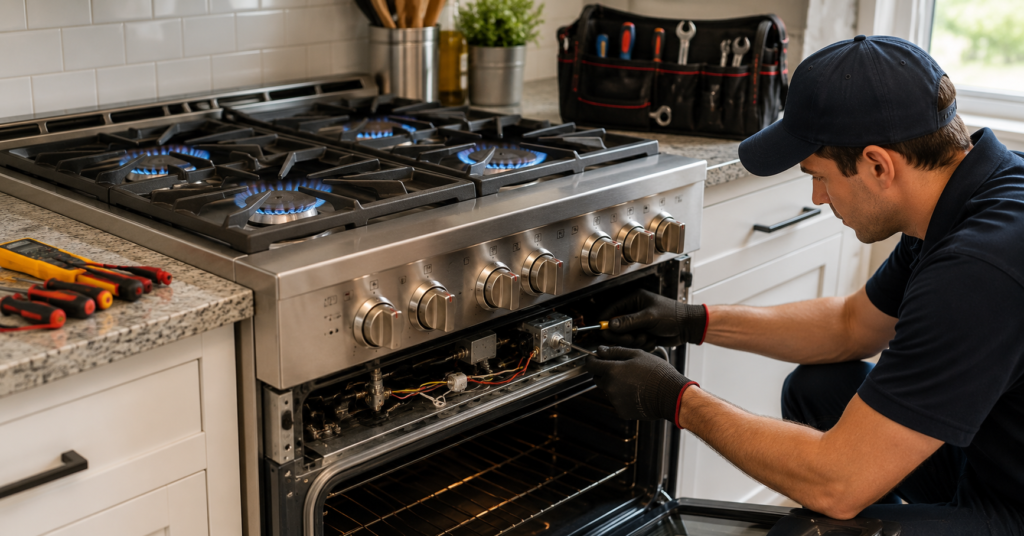
Ovens require less frequent professional attention than refrigerators or washers but benefit from biennial inspection. A technician should check oven temperature calibration, inspect bake and broil elements in electric ovens, test igniter performance in gas ovens, inspect door seals, and verify gas connections are secure and leak-free.
Garbage Disposal: Every 36 Months
Disposals are mechanically simple and require less frequent professional service. However, a technician visit every three years can identify early signs of motor wear, seal deterioration, and grinding component wear before they result in failure or leaks.
Signs That Any Appliance Needs Service Now
Do not wait for the scheduled interval if you notice any of the following symptoms.
- Unusual noises such as grinding, squealing, or banging
- Longer-than-normal cycle times
- Higher energy bills without explanation
- Water under or around the appliance
- Error codes on the display
- Burning smells during operation
- Temperature or performance that is noticeably worse than before
The Financial Case for Preventive Service
A single professional appliance service visit typically costs significantly less than the average emergency repair call. Emergency repair calls also often involve expedited parts sourcing and after-hours labor rates.
More importantly, preventive service catches problems at the component level before they cascade. A worn drum bearing found during a scheduled inspection costs far less to replace than the drum shaft, motor, and outer tub that fail when the bearing eventually seizes.
Ready to schedule a repair? Contact DMV Appliance Care today. We serve the entire DMV area (DC, Maryland & Virginia). Call us at +1 (703) 991-2298 for fast, same-day appliance repair.
FAQ’s: