Running two or three cycles to dry a single load of laundry is not a normal part of doing laundry. It is a sign that your dryer has a developing problem, and that problem is costing you time, electricity, and wear on your clothes and appliance.
A dryer that takes longer than normal to dry clothes is one of the most common appliance complaints we handle at Appliance Care. Every case has a specific cause, and most of them are fixable without replacing the appliance.
1. The Exhaust Vent Is Restricted
This is far and away the most common cause of poor dryer performance, and the most frequently overlooked. Your dryer’s exhaust vent carries hot, moist air out of the machine and through a duct to the outside of your home. Lint accumulates in this duct over time, even when you clean the lint screen faithfully before every load.
A restricted vent means moist air cannot escape efficiently. The dryer runs, generates heat, but cannot remove humidity from the clothes. The result is clothes that feel warm but remain damp after a full cycle.
Beyond performance, a clogged dryer vent is a serious fire hazard. The U.S. Fire Administration estimates dryers cause nearly 3,000 home fires annually, and restricted airflow is the leading contributing factor. Professional vent cleaning once per year is one of the highest-value appliance maintenance tasks a homeowner can schedule.
2. The Lint Screen Needs Cleaning
Yes, a clogged lint screen alone can significantly reduce drying efficiency. Even a thin film of fabric softener residue across the mesh can reduce airflow dramatically. Hold your lint screen up to a light source and look for areas where light cannot pass through. If the mesh appears opaque even after removing visible lint, wash it with warm soapy water and a soft brush to restore full airflow.
3. The Heating Element Has Partially Failed (Electric Dryers)
Electric dryers rely on a resistance heating element to generate heat. When this element develops a partial break, part of the coil stops working while the remainder continues to function. The dryer still produces heat, but at a lower output than the design calls for. Clothes take significantly longer to dry but the cycle does complete eventually.
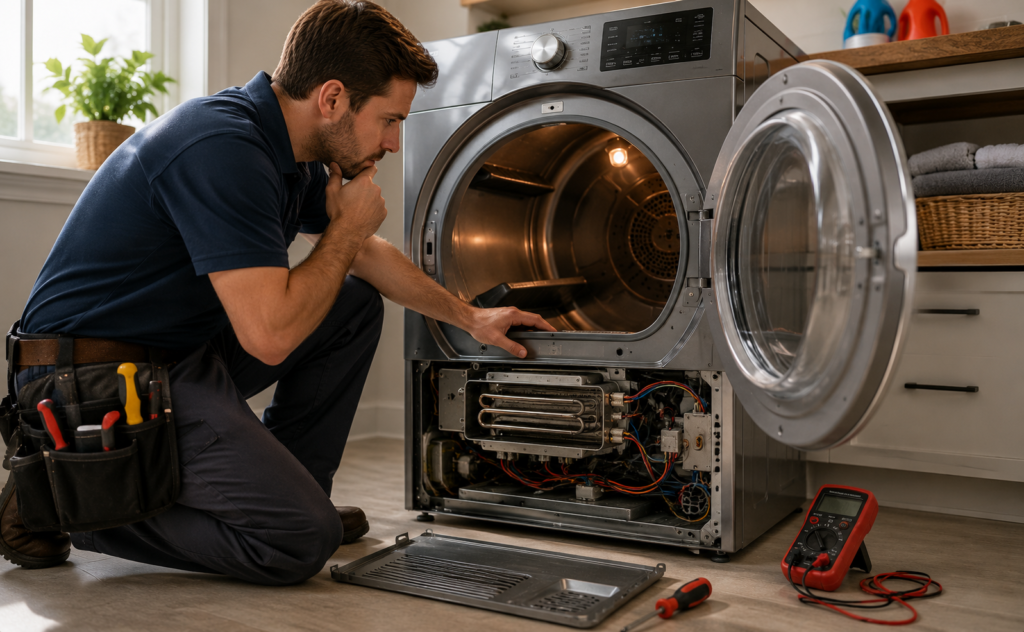
A partially failed element is tricky to diagnose without testing, because the dryer appears to be working. Measuring element resistance with a multimeter will reveal whether the element is producing the correct resistance reading.
4. A Thermostat or Thermal Fuse Is Limiting Heat Output
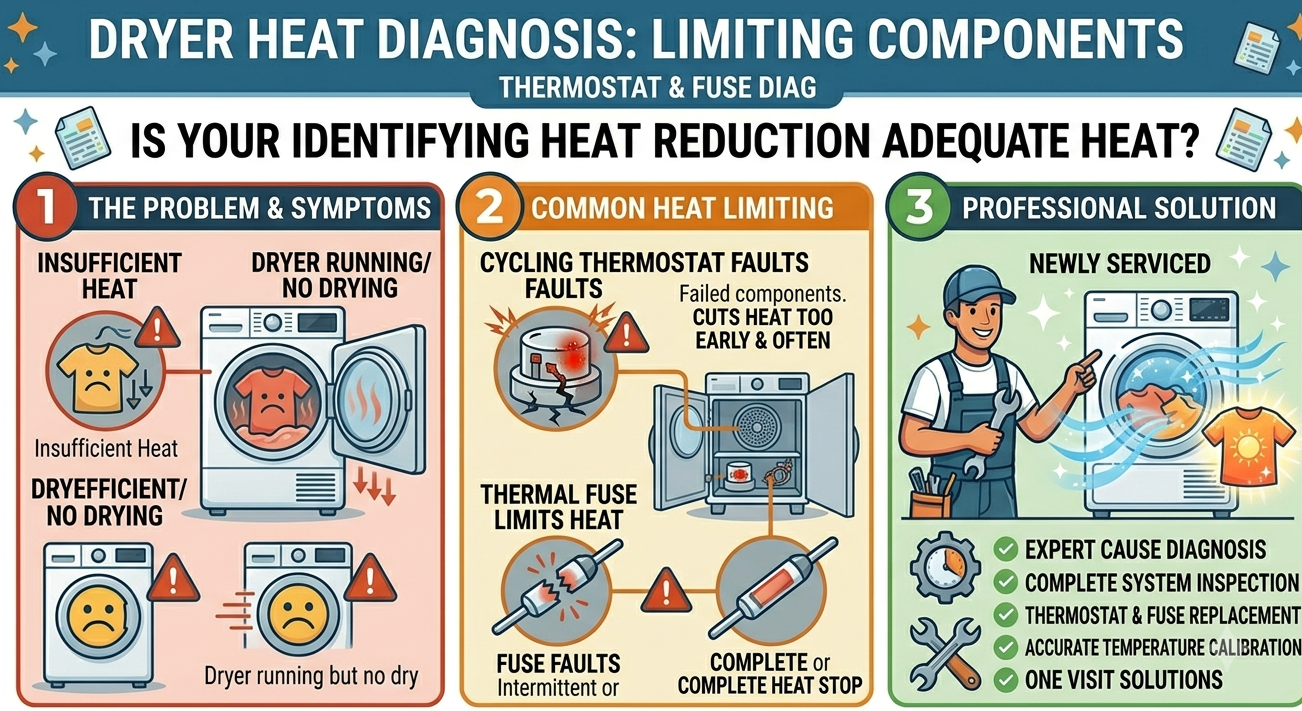
Dryers use multiple thermostats to regulate temperature. The cycling thermostat switches the heating element or burner on and off to maintain the selected heat level. When this thermostat begins to fail, it may cut heat too early and too frequently, leaving the dryer running but producing insufficient heat to dry clothes efficiently.
The thermal fuse is a one-time safety device that cuts power to the heating system if the dryer overheats. A fuse that is partially compromised, not fully blown but weakened, can cause intermittent heat reduction. A fully blown thermal fuse stops heat completely. Either way, it points back to a venting problem as the root cause.
5. The Gas Supply Is Reduced (Gas Dryers)
Gas dryers produce heat through a burner that ignites natural gas or propane. If the gas valve solenoids are weakening, the burner may light but operate at reduced flame output. Clothes dry slowly because the burner cannot generate the temperature the thermostat is calling for.
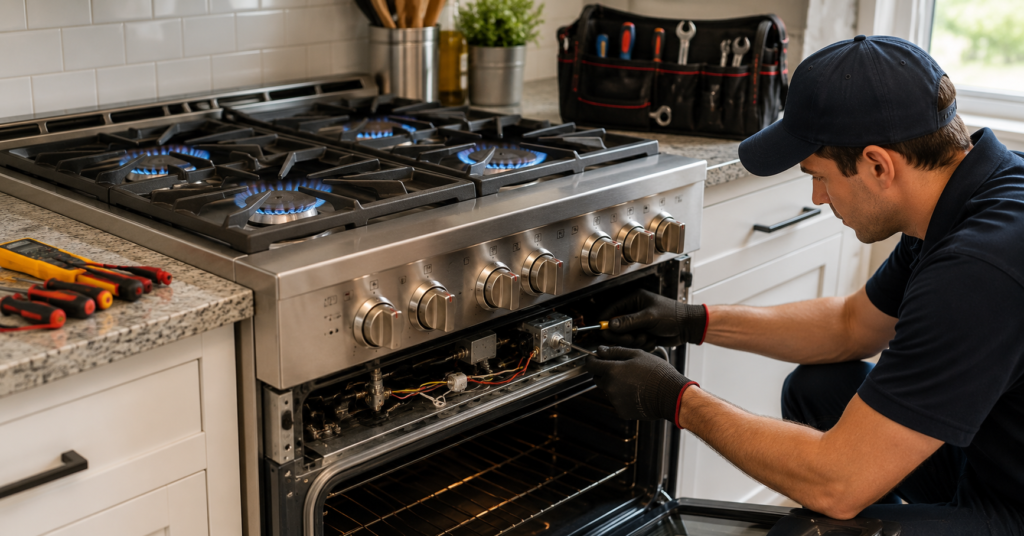
A technician testing a gas dryer should always check the burner flame, both whether it lights reliably and whether its output appears consistent with normal operation.
6. The Dryer Is Overloaded
This is the one cause that requires no repair. A dryer drum needs space for air to circulate through the clothes as they tumble. An overloaded drum prevents this circulation, and clothes at the center of the pile never fully reach drying temperature. Splitting oversized loads into two smaller ones resolves this immediately.
If you are loading the dryer correctly and still experiencing long dry times, the problem is mechanical, not operational.
7. The Drum Is Not Turning Properly
A worn drive belt, failed drum roller, or seized idler pulley can slow the drum’s rotation without stopping it entirely. The dryer runs and produces heat, but clothes are not tumbling correctly, so they clump together and do not dry evenly or efficiently.
Ready to schedule a repair? Contact Appliance Care today. We serve the entire area (DC, Maryland & Virginia). Call us at +1 (703) 991-2298 for fast, same-day appliance repair.
Frequently Asked Questions