Most homeowners do not think about their appliances until something goes wrong. That reactive approach is expensive. The majority of appliance maintenance we handle at Appliance Care involves problems that developed gradually over months or years, problems that a small amount of routine attention would have prevented or caught early at a fraction of the eventual repair cost.
These are the maintenance mistakes we see most consistently, and what the financial cost of each one typically looks like.
1. Never Clean the Dryer Exhaust Vent
Cleaning the lint screen before every load is common knowledge. Cleaning the exhaust duct that runs from the dryer to the outside of your home is not, and it is far more important.
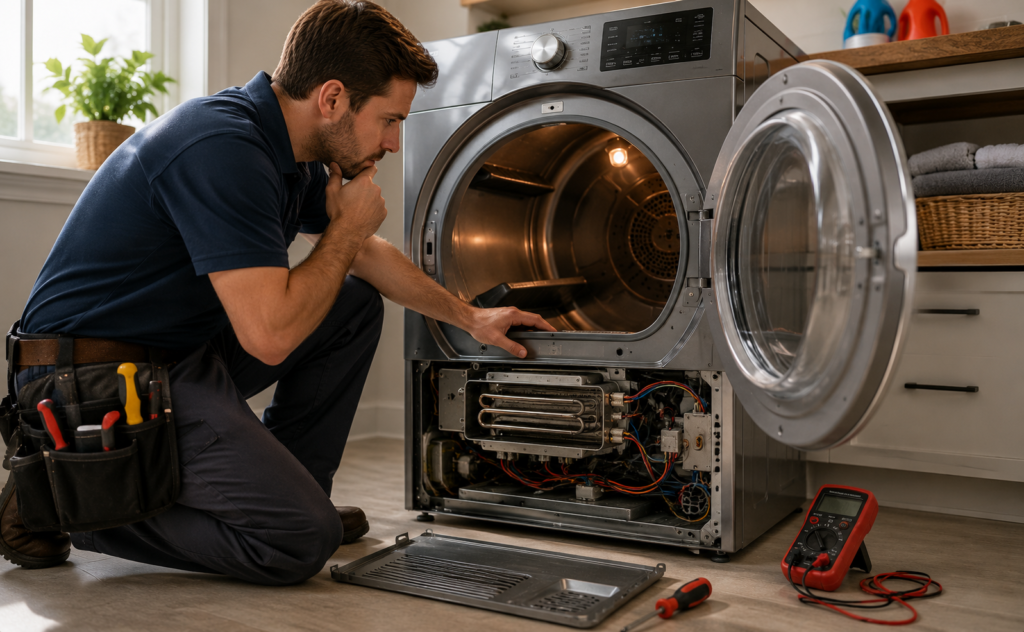
Lint accumulates inside the duct regardless of how faithfully you clean the screen. Over one to two years of typical use, this buildup restricts airflow significantly. The dryer works harder and longer to dry the same load. Energy consumption increases. Components overheat and wear faster. In the worst case, the accumulated lint ignites.
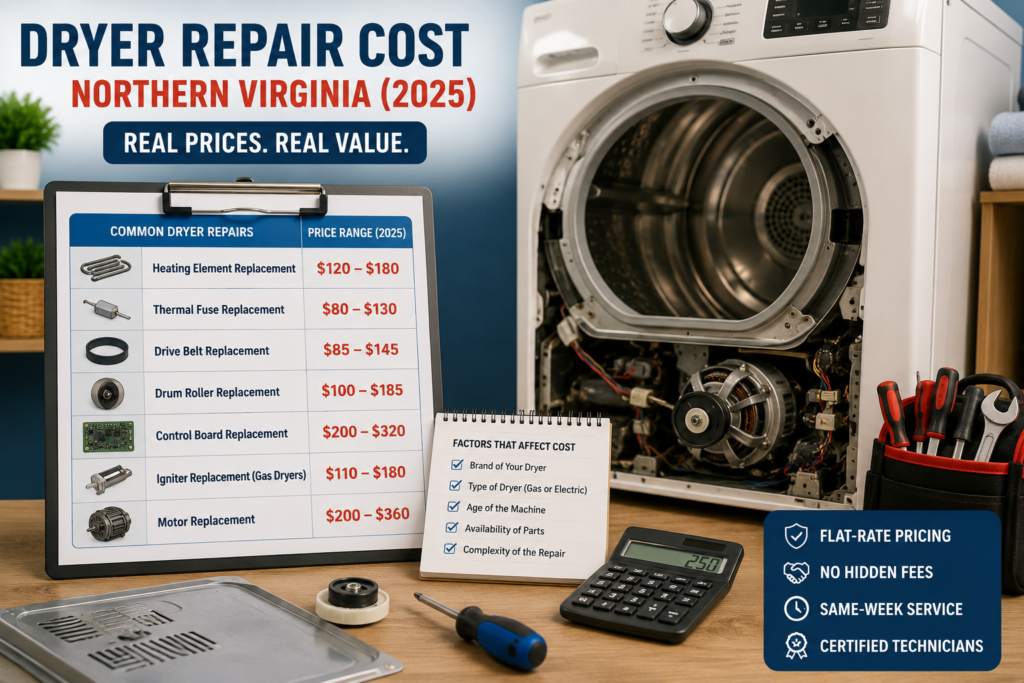
Professional dryer vent cleaning costs relatively little and should happen once per year for average households. Neglecting it for three to five years typically results in a service call for a blown thermal fuse, failed heating element, or burned-out motor, all of which cost considerably more.
2. Ignoring the Refrigerator Condenser Coils
The condenser coils release heat from the refrigerant into the surrounding air. They are located either on the back of the refrigerator or underneath it behind a kick plate. In both locations, they accumulate dust, pet hair, and kitchen grease over time.
Dirty coils cannot release heat efficiently. The compressor compensates by running longer and working harder. Energy bills creep up. The compressor wears faster than it should. In time, the refrigerator struggles to maintain temperature.
Vacuuming the condenser coils every six months takes ten minutes and a vacuum with a brush attachment. Replacing a compressor that has failed from years of overwork takes considerably more time and money.
3. Skipping the Washing Machine Inlet Hose Inspection
The rubber hoses that supply water to your washing machine have a service life. Most rubber inlet hoses last five to seven years before the material begins to degrade, cracking near the fittings, developing blisters, or simply weakening from years of water pressure.
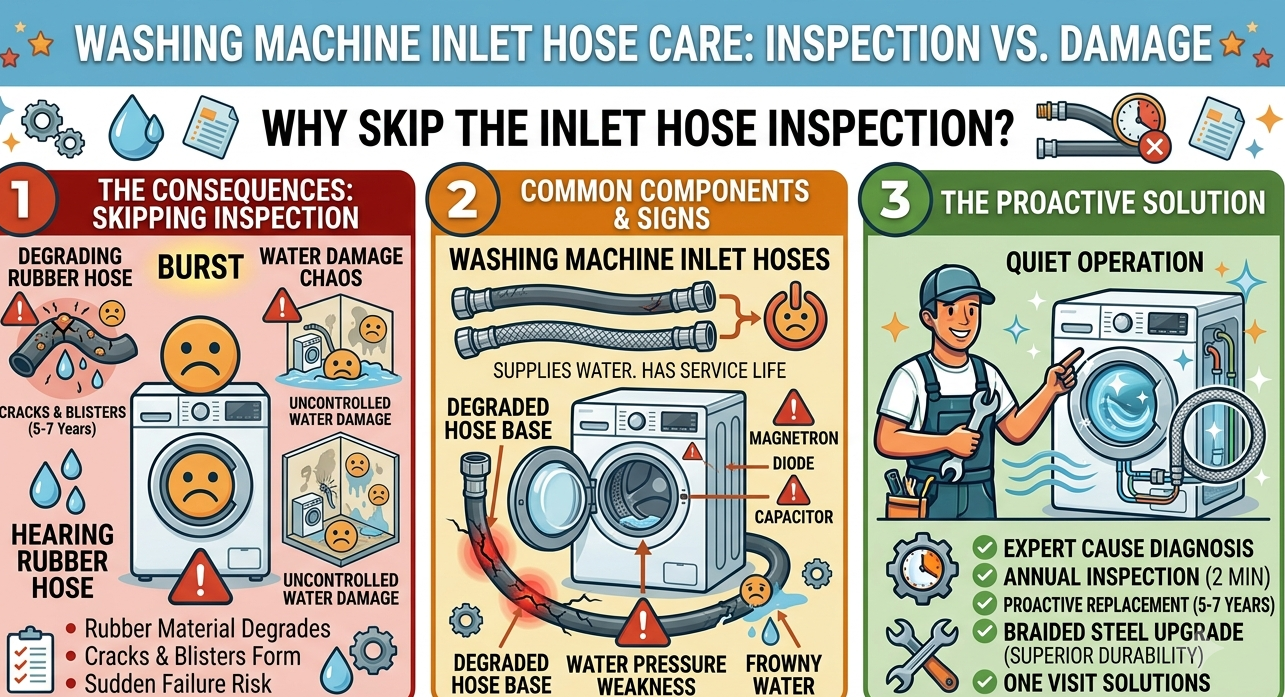
A burst inlet hose can release several gallons of water per minute. Depending on how quickly the leak is discovered, the resulting water damage can affect flooring, subfloor material, walls, and anything else in the laundry area.
Inspecting the hoses once per year takes two minutes. Replacing them proactively every five to seven years costs very little. Water damage restoration costs dramatically more. Braided stainless steel hoses are a worthwhile upgrade over standard rubber; they last significantly longer and are far more resistant to sudden failure.
4. Letting Dishwasher Filter Cleaning Slide
Modern dishwashers have a manual-clean filter at the bottom of the wash basin. This filter catches food particles to prevent them from recirculating onto dishes or reaching the pump. Most homeowners are unaware it exists until their dishwasher starts smelling bad, leaving food residue on dishes, or draining poorly.
A clogged filter makes the drain pump work harder to push water through the restriction. Over time, this strains the pump motor and shortens its service life. Cleaning the filter monthly takes about three minutes. Replacing a dishwasher drain pump costs considerably more.
5. Running the Dishwasher Without Rinse Aid
Rinse aid is not a luxury add-on. It serves a functional purpose: it reduces the surface tension of water so that it sheets off dishes and the interior walls of the dishwasher rather than forming droplets that leave mineral deposits. Without rinse aid, mineral buildup gradually coats the spray arm ports, the interior heating element, and the interior tub walls.
This buildup reduces spray arm efficiency, reduces heating element effectiveness, and contributes to the musty odors that develop inside dishwashers. Keeping the rinse aid dispenser filled is a simple step that protects multiple components simultaneously.
6. Overloading the Washing Machine Repeatedly
Washing machines are rated for a specific drum capacity. Consistently loading beyond that capacity puts excessive mechanical stress on the drive motor, drive belt, drum bearings, and suspension system. The machine struggles to agitate and spin correctly with an overloaded drum.
Homeowners who habitually overload their washer tend to experience bearing and shock absorber failures earlier than average. Splitting large loads into two properly-sized loads takes a little longer but can add years to the appliance’s service life.
7. Delaying Small Repairs
The most expensive maintenance mistake is treating early warning signs as minor inconveniences. A faint grinding noise from the washing machine. A dryer that takes just slightly longer than it used to. A refrigerator that hums a little louder at night. These signals are the appliance telling you a specific component is developing a problem.
Early-stage repairs are almost always faster and less expensive than the repairs required after the same component fails completely, and far less expensive than the secondary damage that often occurs when a failure cascades through adjacent components.
Ready to schedule a repair? Contact Appliance Care today. We serve the entire area (DC, Maryland & Virginia). Call us at +1 (703) 991-2298 for fast, same-day appliance repair.