
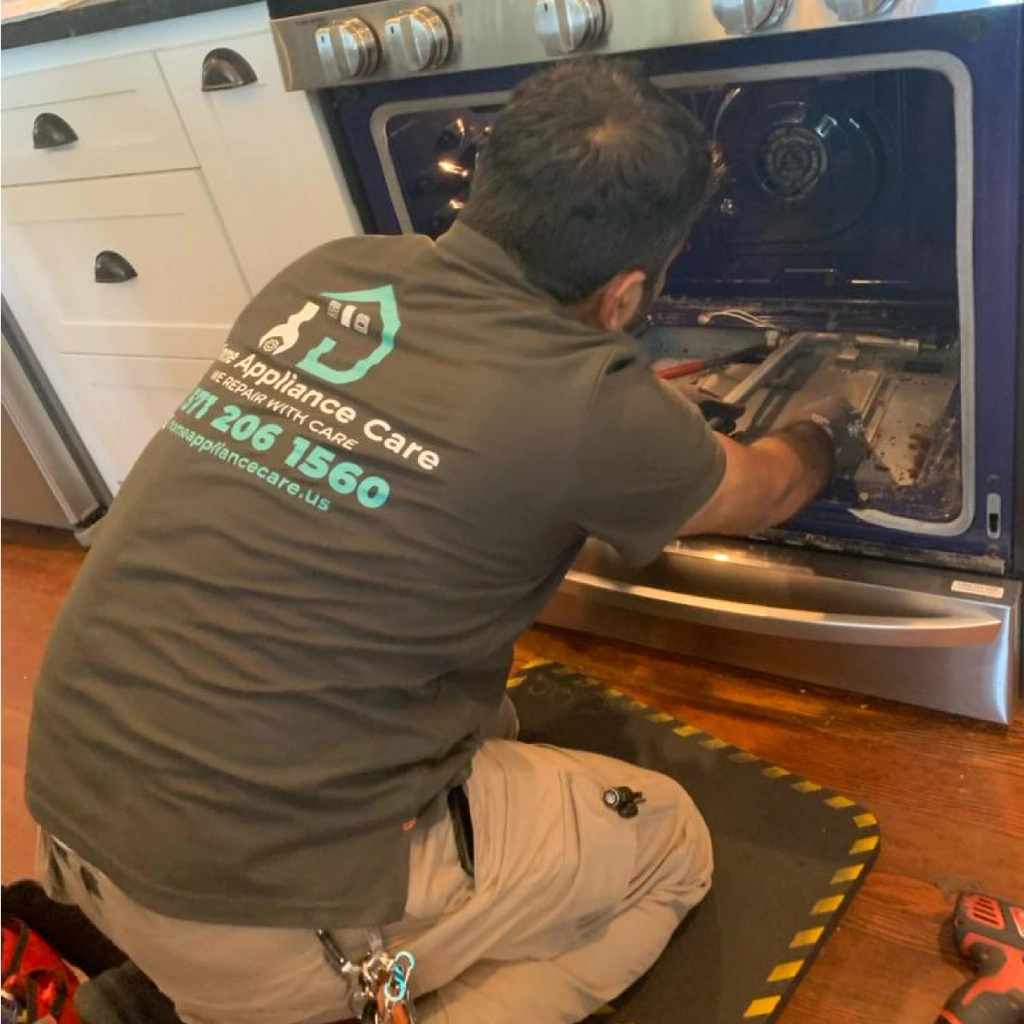

8 Common Oven Problems and How Expert Technicians Fix Them Fast


Introduction

Your kitchen’s silent workhorse is your oven. It runs weekend sourdough experiments, holiday roasts that unite families, and weeknight casseroles. Most homeowners never give it any thought till it stops halfway through a recipe, either. That is exactly when anxiety strikes. The timer makes noises. The kitchen still feels cool. Plans for supper fall apart. The good news? A few times do ovens go off without warning. Long before a complete collapse, they send obvious indications of suffering with temperature falls and odd clicking echoes, or flash error codes appear on the screen. Ignoring them causes pricey emergency replacements, wasted food, and damaged meals.

This book discusses the most common oven problems our experts run across every week. It also shows precisely how professional oven repair service handles every problem fast, safely, and economically. Avoid the guesswork. Find out what to watch for, why expert help is important, and how quickly your kitchen runs perfectly.

1. The Temperature Lies: Your Oven Won’t Heat Properly

Your dial setting is 375°F, and this creates a preheat chime sounds. Your chicken, though, stays pale, and the margins burn. The most often mentioned issue we encounter is temperature changes. Electric ovens usually have trouble when the bake element breaks or splits inside. Metal resistance lowers over the years of thermal cycling. Heat output varies unequally. A worn-out igniter causes a different problem for gas ovens. When the igniter fatigues, it lacks enough amperage to totally open the gas valve. The flame doesn’t change much, and it causes the food to cook very slowly.

Temperature sensors also go out of calibration. They cause early shut-offs or runaway heat cycles by sending false readings to the control board. Professional mending begins with accurate diagnoses. To check element resistance, confirm sensor continuity, and gauge igniter draw current, technicians utilize calibrated multimeters. 

2. The Clicking Game: Gas Oven Refuses to Ignite

A fast clicking sound without a flame is aggravating and maybe dangerous as well. Modern gas ovens start their first combustion using a spark module and an igniter electrode. The igniter causes noticeable sparks when it gets older, but it doesn’t have the heat capacity to keep a flame going. Accumulated grease around burner ports can also impede gas flow. Food leftovers can impede correct ignition patterns by acting like a barrier. A broken electrode or broken spark module produces the very same loop of irritation.

Never try to light a gas oven by hand using lighters or matches. Trapped gas, together with open flames, poses a major fire and explosion risk. Qualified gas oven repair experts isolate the ignition circuit, properly replace worn parts, and use specialist equipment to clean clogged ports. The solution usually takes less than an hour. Your oven comes back to life free from the risky conjectures.

3. Burned Out Elements: Electric Oven Loses Its Heat Source

 Electric ovens use two strong heating elements. The bake element is placed in the bottom cavity. The broil element hangs close to the top rack. Your culinary ability halves when one of them breaks. Occasionally, the damage is clear-cut, that burns metal coils and causes observable cracks. You will occasionally see little sparks or audible arcing while running. These aren’t little eccentricities. They indicate immediate repair of appliances.

Generic replacing parts sometimes result in early failure or inconsistent heating once more. Certified professionals fit the precise OEM part number for your oven model. They check wiring integrity, make sure the new element is well earthed, and calibrate it for the best thermal distribution. The outcome? Uniform browning. Reliable preliminary heating. Ideal roasting. Everything was restored swiftly and securely.

4. The Escaping Heat: Damaged Oven problem

Your oven is made to contain heat. The door seal, or gasket, helps keep heat in. Heat continuously leaks out when the seal is damaged, torn, or worn. The oven thus has to labor more and stay on longer to get to the proper temperature. This could raise energy expenses and lead to erratic cooking. You might find that food is overcooked on the exterior but undercooked in the middle or that the region near the oven door is extremely hot. 

The Escaping Heat: Damaged Oven Door Seal

One easy method to see the seal is to preheat the oven to 350°F and gently feel around the door for heat escaping. The gasket probably needs replacing if a lot of heat is escaping. Quickly, a technician can take off the previous seal, clean the area, and fit a new manufacturer-approved gasket. Once changed, the oven cooks more evenly, keeps heat more efficiently, and uses less energy. A good door seal can also help keep your kitchen cooler during hot weather.

5. Dark Kitchen: Oven Light Stops Working

Though a minor problem, an oven light becomes upsetting when you cannot really see your food as it bakes. Often, the answer is as easy as installing a new oven bulb with high-temperature capabilities. But if bulbs keep going out, maybe there’s a more serious problem.

Over time, too much heat can damage the bulb socket; oven cabling could get frayed or loose. A qualified person can check the wiring, test the outlet, and change any broken parts. If the problem is with the control board, they can fix or calibrate the lighting circuit. Once fixed, the oven light will work reliably once more, therefore facilitating food monitoring and spill identification before they get baked-on messes.

6. The Brain Freeze: Control Board Malfunctions

Modern ovens’ temperature settings, cooking times, self-cleaning options, and safety elements are all controlled by electronic circuit boards. The oven can act erratically if the control board starts to fail. You might see error messages on the display, experience unresponsive buttons, or discover that the oven turns off suddenly during cooking.

Identifying a control board problem calls for expert testing. Technicians examine electrical connections, look up error codes, and make sure the board is sending and receiving the right impulses. Should replacement be required, they fit a model-specific control board and test the oven to make sure everything functions correctly. The appropriate replacement part helps fix performance issues and stop future ones.

7. Self-Clean Cycle Chaos: Door Locks or oven problems

The self-clean cycle uses very high heat, occasionally over 900°F, to burn away food leftovers and grease. Though useful, this great heat might cause oven parts additional tension. Occasionally, the door lock could become caught, a thermal fuse could blow, or the circuit breaker might continually trip during or after the cleaning cycle. 

Should a failed self-clean cycle cause your oven door to get locked, resist prying it open. That can break the locking mechanism and raise the fixed cost. A professional technician can safely open the door, check the thermal fuse, look at the wiring, and fix any broken parts. Good maintenance will bring back the self-clean feature and assist in safe running of your oven. Good kitchen ventilation while self-cleaning helps to guard internal components and lessen heat accumulation.

8. Prevention Beats Repair: Smart Oven Care Habits

One of the finest methods to prolong the life of your oven and avoid expensive fixes is routine maintenance. Small routines can really change things. Before they set and burn over heating elements, clean up messes as quickly as you can. Every month, look for indications of damage, such as rips or gaps, on the door gasket.

Steer clear of covering the oven’s bottom with aluminum foil, as it could impede heat flow and possibly harm heating elements. Once or twice a year, cutting self-clean cycles also helps to protect gaskets, wiring, and other parts from too much heat that can wear them out faster.

Once a year, planning a professional oven inspection can enable early discovery of minor problems before they turn into major repairs. Technicians can examine electrical connections, test safety measures, check temperature precision, and make sure the oven is running effectively during an inspection. Your oven can perform consistently for many years with good upkeep and care.

Why Expert Oven Repair Service Saves Time, Money, and Sanity

DIY fixes look tempting online. But ovens combine high voltage, explosive gas lines, and precision thermal systems. One misstep voids manufacturer warranties. Another creates fire hazards. Certified appliance repair technicians bring calibrated diagnostic tools, factory-spec parts, and years of field experience. They identify root causes, not just surface symptoms. Repairs happen fast. Prices stay transparent. Warranties back every job.

When your oven acts up, skip the guesswork. DMV Appliance Care delivers rapid, reliable oven repair service across Washington D.C., Maryland, and Virginia. Our technicians handle gas ignition failures, electric element swaps, control board diagnostics, and door seal replacements daily. We stock parts for every major brand. Same-day service available. Call +1 (703) 991-2298 or book online today. Keep your kitchen running. Keep your meals perfect.

Final Thoughts: Keep the Heat Where It Belongs

Your oven does more than cook food. It anchors routines, preserves family traditions, and turns simple ingredients into memorable meals. But like every hardworking appliance, it demands attention. Acting quickly saves money, protects your home, and extends appliance life.If your oven struggles to heat, leaks warmth, sparks during use, or displays error codes, do not wait. Schedule professional oven repair before minor glitches become major headaches. Fast action keeps your kitchen running smoothly, your groceries fresh, and your mind completely at ease. Your next perfect roast deserves a perfectly working oven. Let us help you keep it that way.

FAQ’s


Persistent temperature drops, delayed preheating, error codes, visible element damage, or ignition failures all require expert attention. DIY attempts risk electrical hazards, gas leaks, and void manufacturer warranties. Certified technicians diagnose safely and accurately.

Most ovens last 15 to 20 years. If your unit is under 12 years old and repair costs fall below 50% of a new model’s price, fixing it makes strong financial sense. Our technicians provide honest, upfront assessments before any work begins. We never push unnecessary replacements.

Most jobs finish in one visit, usually within one to two hours. Complex control board or gas valve replacements may require ordered parts, taking one to three business days. We always communicate timelines, pricing, and part availability upfront. No surprises.

Yes. We service GE, Whirlpool, Samsung, LG,  and more. Our technicians carry brand-specific diagnostic software, calibrated tools, and factory parts for seamless, warranty-backed repairs.

Minor issues like replacing a light bulb or cleaning burner ports are safe for homeowners. However, temperature sensor calibration, element wiring, and gas valve testing require professional training. Incorrect handling can damage the control board or create safety hazards. When in doubt, call a licensed technician.

case studies

See More Case Studies

Contact us

Repairs Done Right.

Our office will provide all answers to your inquiries and dispatch a capable Technician at your preferred time.

Your benefits:
Contact Us