
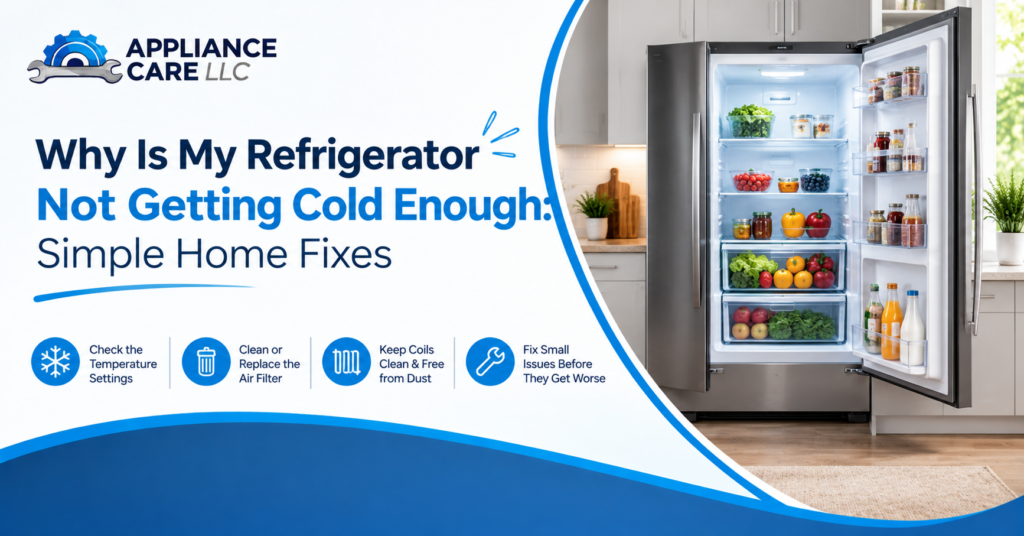
Why is my refrigerator not getting cold enough? This is the question every homeowner asks the moment they open their kitchen fridge to pour milk tonight and find the carton feels warm on the shelf. Soft butter melts inside door trays daily. Warm food creates big health risks for busy families. You want to know why my refrigerator is not getting cold enough fast.
Most cooling problems start from poor air circulation inside. Heavy dust coats lower metal coils under the box. Blocked plastic vents stop cold airflow completely.
Simple maintenance steps get your unit running cold again. Vacuum dirty coils using narrow brush tools every month. Clearing air vents saves your weekly groceries from ruin.
Common Reasons Why Is My Refrigerator Not Getting Cold Enough
Understanding why is my refrigerator not getting cold enough saves repair money.
Dusty Condenser Coils: Thick pet hair coats lower metal coil wires. A why is my refrigerator not getting cold enough issue stems from dirty coils. Clean coils using vacuum brushes to release trapped heat.
Blocked Internal Vents: Large cereal boxes block cold air supply slots. A why is my fridge and freezer not getting cold enough problem happens when vents clog. Move food packages away from rear air vents.
Damaged Door Gaskets: Old rubber door seals tear over long periods. Cold air leaks out onto kitchen floors every minute. Replace cracked rubber gaskets to lock cold air inside.
Failed Evaporator Fans: Broken fan motors stop blowing cold air across coils. A why is my fridge not cooling and making noise issue signals failing fan blades. Replace squealing fan motors to restore airflow.
Broken Defrost Timers: Heavy white frost covers internal cooling coils completely. Thick frost blocks air passages between lower freezer drawers. Melt thick frost using warm hair dryers to clear vents.
Steps to Restore Proper Cabinet Airflow
Restoring proper air circulation requires simple tools and care.
Check Temperature Settings on Inner Controls
Inspect inner digital panels for accidental setting changes today. Ensure fridge controls sit between thirty-five and thirty-eight. Set freezer controls to zero degrees for best results.
Clean Black Condenser Coils Under Units
Unplug power cords from wall outlets behind your unit. Remove front toe grilles or rear metal panel covers. Vacuum thick grey dust off metal coil surfaces carefully.
Inspect and Wash Soft Rubber Door Seals
Wipe soft door gaskets clean using warm soapy water. Insert paper bills between closed rubber seals and frames. Replace loose gaskets if paper slides out without pulling.
Rules for Cold Refrigerators
Simple care steps protect your food investment every week.
Space Out Food Containers: Packing shelves too full blocks internal air passages. Leave two inches between items for strong air movement. Open space helps machines maintain steady cold temperatures daily.
Vacuum Coils Every Month: Dust acts like thick blankets on metal coil wires. Brush coil surfaces clean twice every single year. Clean coils help bottom motor compressors run much cooler.
Avoid Hot Food Dishes: Placing hot soup pots inside raises internal temperatures. Cool cooked leftovers on kitchen counters before storing them. Low heat levels prevent extra work for cooling motors.
Keep Wall Clearance Space: Avoid placing kitchen units right next to hot stoves. Ensure three inches of space around outer cabinet walls. Good air space keeps cooling systems working efficiently daily.
Change Internal Water Filters: Clogged water filters slow down automatic ice maker machines. Replace internal filter cartridges every six months straight. Fresh water filters keep ice systems running without strain.
Troubleshooting Electrical Switches and Thermostats
Complex electrical failures stop compressors from starting cooling cycles.
Test Internal Cabinet Sensor Thermistors
Small sensor thermistors measure inner cabinet temperature levels accurately. Faulty thermistors send wrong signals to electronic control boards. Replace bad sensors if food stays warm on shelves.
Listen to Bottom Motor Compressor Sounds
Check if the back motor hums smoothly during cooling cycles. Clicking sounds mean start relay switches failed on compressors. Install new start relays to get main motors running.
Inspect Top Damper Control Motors
Automatic damper doors control cold air flow into fridges. Stuck damper doors keep cold air locked inside freezers. Replace broken damper motors to balance internal box temperatures.
Understanding Refrigerator System Repair Costs
Knowing why is my refrigerator not getting cold enough helps you plan family budgets. Simple parts like door seals cost under one hundred dollars. Major sealed system compressor repairs cost much more money.
Compare total repair estimates against prices of new models. Replace ten-year-old units if repairs cost too much. Modern appliances use less electricity and run much quieter.
Asking what the first thing to check is when a refrigerator stops cooling saves time. Check wall plugs and temperature dials before calling technicians. Quick checks prevent paying for unnecessary service visits at home.
Preventing Food Loss During Sudden System Failures
Keep fridge doors closed tightly when internal cooling stops. Sealed cabinet boxes keep food cold for four hours. Move perishable meats and dairy items into ice coolers.
Pack bags of ice around fresh food packages daily. Avoid opening doors often to check internal cabinet temperatures. Fast action stops bacterial growth and protects family health.
How DMV Appliance Care Can Help You
Appliance Care offers top kitchen equipment repair services daily. We serve homeowners across Alexandria and the DMV area. Our technicians fix fridges, stoves, washers, dryers and dishwashers.
We provide clear upfront price quotes before starting work. You never pay hourly fees for home service visits. Certified workers fix why is my refrigerator not getting cold enough issues fast. We offer flexible scheduling choices to fit busy family routines. Call Appliance Care at +1 (703) 991-2298 for quick service today.
Everyday Care Rules for Kitchen Appliances
Check rubber door gaskets for crumbs every single week. Vacuum lower metal coil wires to remove thick grey dust. Avoid blocking rear air vents with large food boxes. Keep inner thermostat controls set at thirty-seven degrees. Simple care habits keep home kitchen units running like new.
Conclusion
Warm fridge shelves ruin expensive meat and fresh milk. Always clean lower coils to keep motors running cool. Check flexible rubber door seals for small gaps daily. Avoid packing food items too tightly on wire racks. Call skilled local technicians when electric fans stop spinning. Taking quick action saves money on weekly family groceries. Simple care keeps your kitchen appliance cooling like new and puts an end to worrying about why your refrigerator is not getting cold enough.
Frequently Asked Questions
Turn temperature dials down to thirty-seven degrees, clear blocked air vents, and vacuum dust off lower condenser coils.
Unplug power cords for ten minutes, plug them back in, then ensure temperature controls sit at correct settings.
Dirty condenser coils, failing door seals, or broken evaporator fan motors prevent box temperatures from dropping below forty.
Fixing is worth it if repairs cost under half the price of new units and systems stay under eight years old.
Motors run constantly when dirty coils, iced evaporator vents, or low refrigerant levels stop efficient heat transfer cycles.